
As Peter Phillips and Harriet Sperling prepare to marry in a private ceremony this Saturday, royal watchers from Copenhagen to Accra are asking the same question: is this the future of monarchy?
I have watched royal weddings from many vantage points in my life. As a child in Accra, I remember my grandmother gathering us around a small television to watch footage of British royal ceremonies — vast, glittering affairs that felt as distant and magical as fairy tales. Later, living in Copenhagen, I came to understand a different kind of royal wedding entirely. Quieter. More personal. A royal family stepping out of the palace and into the neighbourhood.
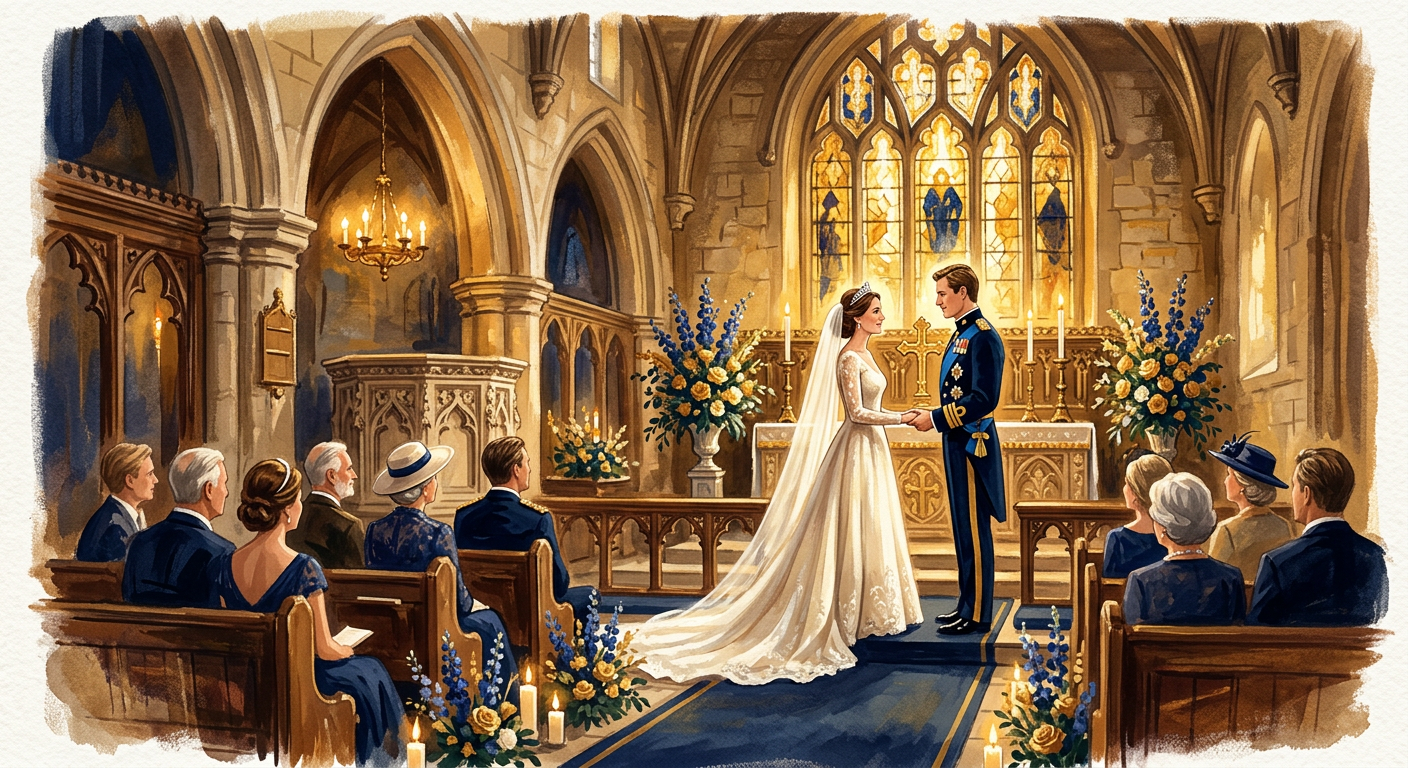
This Saturday, when Peter Phillips and Harriet Sperling exchange vows at All Saints Church in the Gloucestershire village of Kemble, Britain’s royal family will do something quietly radical. It will hold a royal wedding that the world cannot watch.
And the world, I would argue, is paying closer attention because of it.
The Privacy Paradox
The ceremony is expected to be a private family event with no television coverage, with senior royals including King Charles, Queen Camilla, the Prince and Princess of Wales, and Princess Anne among those attending.
For a family whose weddings have historically been among the most watched television events on earth — Diana and Charles drew an estimated global audience of 750 million in 1981, a figure I cannot independently verify but which has been widely reported — this represents a remarkable shift in approach.
But here is what my years of covering royal families across four continents have taught me: privacy, when chosen deliberately by a royal family, is never simply personal. It is always also political. It is a statement about what the institution values, how it sees itself, and crucially, how it wishes to be seen.
What Copenhagen Taught Me
The Scandinavian monarchies understood this long before Britain did. When Crown Princess Mary of Denmark — herself a commoner, an Australian nurse turned Danish princess — married Frederik in 2004, the ceremony was grand but the message was intimate. Here was a family choosing to emphasise connection over spectacle. Humanity over hierarchy.
The Danish, Swedish, and Norwegian royal families have spent decades building what I think of as the neighbourhood monarchy model — visible, accessible, relatively unadorned. Their approval ratings across Scandinavia reflect this. They have made themselves comprehensible to their people.
Britain has been slower to arrive at this understanding. But Peter Phillips — the eldest grandchild of the late Queen Elizabeth II, who carries no royal title after Princess Anne deliberately declined them upon his birth — has perhaps always understood it instinctively. He has lived his entire life in the fascinating middle ground between royal and civilian. He attended school, built a career, navigated divorce, and raised daughters largely outside the spotlight that consumes his cousins.
A Bride the World Can Recognise
Harriet Sperling is an NHS paediatric nurse specialist and a single mother to a teenage daughter. She is, in the most meaningful sense, a working woman. A caregiver. Someone whose daily life before Peter Phillips involved shift patterns and sick children and the quiet heroism of public service.
From Lagos to Lyon, from Manila to Montreal, this is a story that resonates. Not because it is glamorous — it is precisely the opposite of glamorous — but because it is recognisable. Royal families that produce recognisable stories tend to survive. Those that produce only spectacle tend, eventually, to struggle.
The couple is believed to have met at a sporting event involving their children — two parents, navigating the particular tenderness of raising children after the end of a marriage, finding one another in the ordinary business of life. There is something in that story that translates across every culture I have ever reported from.
The Blended Family as Royal Statement
Between them, Peter and Harriet bring three daughters to this marriage — Savannah and Isla from Peter’s first marriage to Autumn Kelly, and Georgia, Harriet’s daughter from a previous relationship. On Saturday, a blended family will stand at the altar of an English country church.
In many of the royal families I cover — the Gulf monarchies, the remaining Asian royal houses, even some European families — this would be unthinkable. Divorce remains complicated territory. Blended families at royal ceremonies remain rare.
Britain is doing something quietly significant by simply allowing this to be unremarkable. By treating it as a family gathering rather than a constitutional crisis. That normalisation matters more than most royal watchers acknowledge.
What the World is Watching
In my inbox this week, messages have arrived from readers in twelve countries asking about this wedding. Not because Peter Phillips is a working royal. Not because there will be a carriage procession or a balcony appearance or a globally broadcast kiss.
But because somewhere in a Cotswolds village on a Saturday morning, a family is gathering — a real, complicated, loving, imperfect family — and asking a king to witness their happiness.
Every crown tells a different story. This Saturday, Britain’s crown is telling one of its most human ones in years.
I will be watching. From wherever I am in the world, I always am.
Nadia Osei-Mensah is Crown & Court’s International Royal Correspondent. Born in Accra, raised in Copenhagen, educated in Tokyo, she covers the royal families the Western press too often ignores.
“Every crown tells a different story. I’m here to translate.”