Crown Chronicles: history that still shapes the throne.
I have spent a great deal of my career trying to explain to British and American readers that monarchy does not always work the way they assume it does. Sweden’s royal family gives me one of my favourite examples, because its founder was not born a prince anywhere. He was born the son of a small-town French lawyer, and he became a king through a vote.
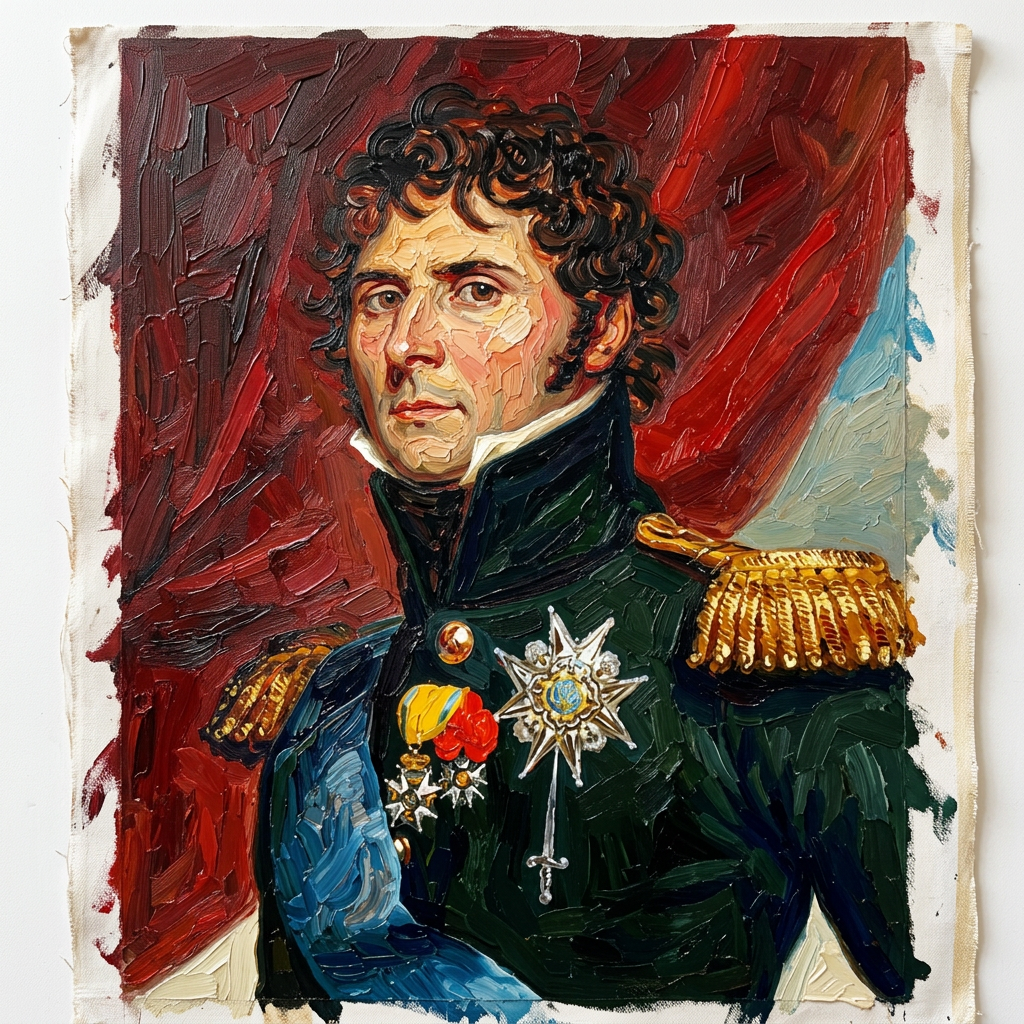
His name was Jean-Baptiste Bernadotte, and in 1763 nothing about his birth in the French town of Pau suggested a throne was waiting for him. He joined the French army as a private soldier at seventeen. The Revolution that followed gave a man like him room to rise on merit rather than birth, and rise he did, general by his early thirties, Marshal of France under Napoleon by 1804, Prince of Pontecorvo two years after that. He fought in Napoleon’s campaigns. He also, characteristically, never fully trusted the man he fought for, and the feeling was mutual.
Here is where the story turns properly remarkable. By 1810, Sweden had a dynastic problem. The king was old and childless, his chosen heir had just died, and the country, having recently lost Finland to Russia, needed someone capable of leading it forward. The Swedish parliament, the Riksdag, looked beyond its own borders and settled on Bernadotte. Swedish officers who had encountered him during the wars remembered him as fair and unusually decent toward prisoners, which mattered more to them than anyone in Paris might have guessed. He accepted. He converted to Lutheranism. He took a new name, Charles John, and was adopted by the childless king as his heir.
I find this detail rather moving every time I return to it. A career soldier from a country with no king at all, arriving in Stockholm, learning a culture and a faith that were not his own, and committing himself to a constitutional model he had no inherited reason to honour. He never fully learned Swedish. He governed anyway, capably enough that even the nobles who resented a commoner on the throne came around to him within a decade.
In 1813, he made the choice that defined his legacy more than any battle he’d fought for Napoleon. He broke with his old emperor entirely and led Swedish forces into the coalition against him. By 1814, Sweden had gained Norway. By 1818, Charles XIII was dead and Bernadotte became King Charles XIV John of Sweden and Norway, a former private soldier now wearing two crowns he had earned rather than inherited.
What I find myself returning to, writing this from outside the British tradition I usually have to translate for English-speaking readers, is how completely this irregular beginning became permanent. Charles XIV John died in 1844, and the House of Bernadotte never left the Swedish throne. King Carl XVI Gustaf, whose eightieth birthday gathering in Stockholm drew nearly every reigning monarch in Europe, is his direct descendant. When Crown Princess Victoria eventually becomes queen, she will be the eighth Bernadotte to sit on that throne, more than two centuries after a French lawyer’s son first stepped off a ship in Stockholm, uncertain of the language and entirely certain of nothing else.
For readers who want the full arc of how this happened, Alan Palmer’s Bernadotte: Napoleon’s Marshal, Sweden’s King remains the most thorough English-language account I know of.
Every crown tells a different story. Sweden’s happens to begin with a man who never expected to wear one, and built a dynasty that has now outlasted Napoleon’s own family by two centuries.
Nadia Osei-Mensah is Crown & Court’s International Royals Correspondent. Born in Accra, raised in Copenhagen, and educated in Tokyo, she writes about the royal families the Western press too often overlooks.
“Every crown tells a different story. I’m here to translate.”