Crown Chronicles: history that still shapes the throne.
There is a question I have put to every undergraduate who ever sat through my lectures on dynastic collapse: how long does it take for three centuries of absolute power to end? The honest answer, in the case of the Romanovs, is rather less than eighteen months.
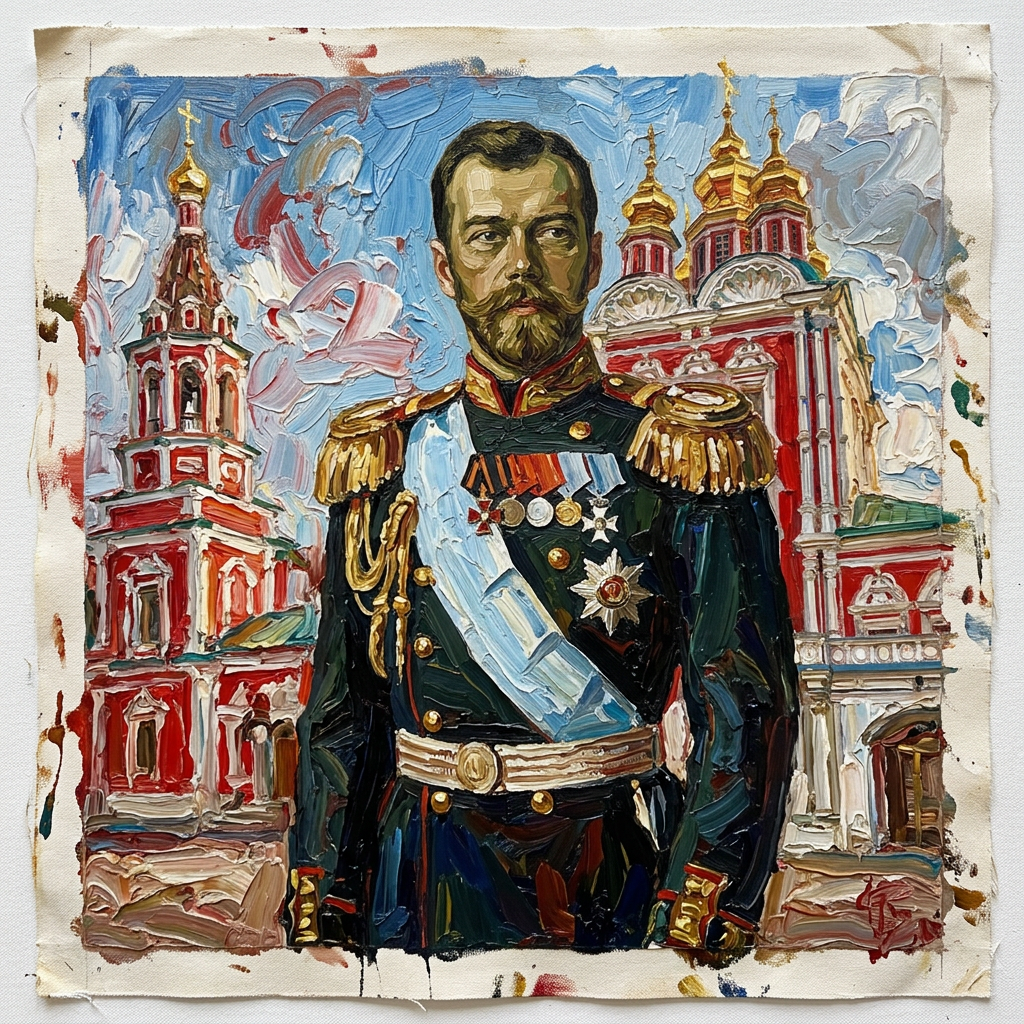
The dynasty had ruled Russia since 1613; by the time Nicholas II inherited the throne in 1894, the institution he inherited was already showing the strain that would eventually break it. Russia’s defeat in the Russo-Japanese War humiliated an empire unaccustomed to humiliation. The 1905 Revolution that followed was, in retrospect, a warning the tsar declined to hear properly. He was, by most contemporary and later historical accounts, a well-intentioned ruler entirely unsuited to the demands his position required of him; sincerity and competence are not, unfortunately, the same quality, and history has rarely been forgiving of the distinction.
The First World War finished what the Russo-Japanese War had begun. Nicholas took personal command of the army in 1915, a decision that placed him directly in the path of blame for every subsequent military failure. In his absence from the capital, his wife Alexandra leaned heavily on the counsel of Grigori Rasputin, a man whose influence over the imperial family did considerably more damage to its public standing than any battlefield reversal. By early 1917, the empire was short of bread, short of fuel, and almost entirely short of patience.
The abdication itself, when it came, was almost anticlimactic in its mechanics. On 15 March 1917, at Pskov, Nicholas renounced the throne, first considering abdication in favour of his young son before settling on his brother, Grand Duke Michael, instead. Michael refused the crown the following day, insisting he would accept it only by the consent of a future constituent assembly. With that single refusal, three hundred and four years of Romanov rule ended, not with a battle or a treaty, but with one man quietly declining to be king.
What followed was imprisonment rather than exile. The family was moved first to Tobolsk in Siberia, then, in April 1918, to Yekaterinburg, where they were held in a house the Bolsheviks called, with the particular bluntness of revolutionary bureaucracy, the House of Special Purpose. As anti-Bolshevik forces advanced on the city that July, local authorities were instructed to ensure no rescue could succeed. In the early hours of 17 July 1918, Nicholas, Alexandra, their five children, and several retainers were taken to the cellar and shot.
The bodies were hidden so thoroughly that confirmation took the better part of a century to arrive. Remains were exhumed near Yekaterinburg only in 1991, identified through DNA analysis two years later, and the case was not considered fully closed until the remaining two children, long unaccounted for, were positively identified in 2007. One particularly persistent legend, that the youngest daughter Anastasia had somehow survived, produced decades of claimants; the most convincing of them, a woman named Anna Anderson, was conclusively proven by DNA testing in 1994 to have been a Polish factory worker with no Romanov blood whatsoever. The dynasty’s end, it turns out, was even more thoroughly final than its enemies originally managed to claim.
For readers who want the fuller architecture of how a dynasty this powerful arrived at a cellar in the Urals, Simon Sebag Montefiore’s The Romanovs: 1613-1918 remains the most comprehensive single account in English, and considerably more readable than the subject perhaps deserves.
What happened in that house in July 1918 is still happening, in the sense that every modern monarchy now governs with the example sitting somewhere in institutional memory. Three centuries of inherited certainty, undone by a war it should not have fought, a family it could not control, and a single refusal that nobody in the family had the standing left to override.
Edmund Calloway is Crown & Court’s Royal History Correspondent. A retired Oxford professor with thirty years studying European dynastic history, he believes the present makes considerably more sense once one has properly understood the past.
“History doesn’t repeat itself — but dynasties certainly do.”