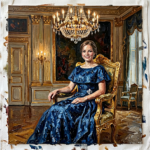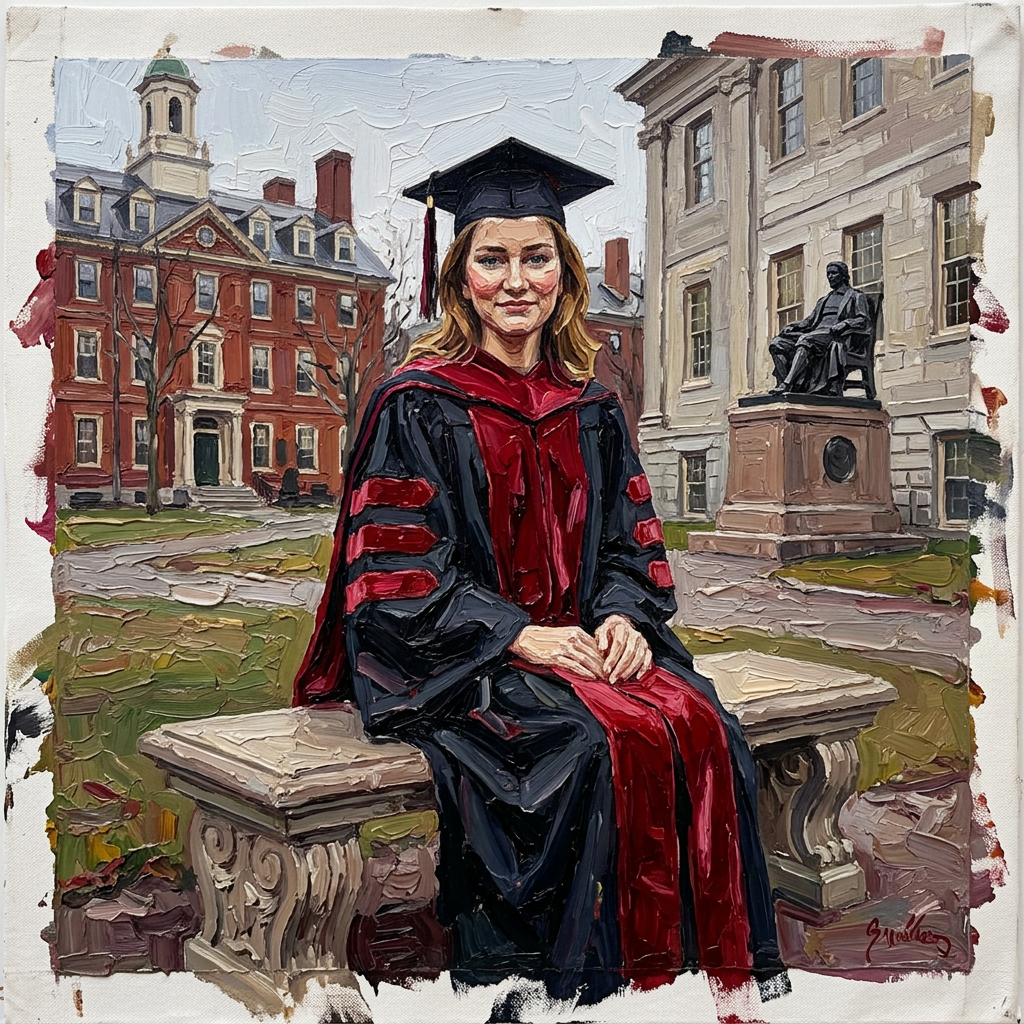
Princess Elisabeth of Belgium just finished two years at Harvard’s Kennedy School. When her name was called to collect the diploma, it wasn’t the one most of us would have used.
As an Amazon Associate, Crown & Court earns from qualifying purchases.
There is something rather wonderful about watching a future queen collect her diploma under a name almost nobody outside Belgium would recognise. When Princess Elisabeth, the Duchess of Brabant, walked across the stage at Harvard’s commencement this May, she was called up not as a princess but as “Elisabeth de Saxe-Cobourg.” I find I like her considerably more for that.
She had reason to be there in the first place that has nothing to do with her family name at all. Elisabeth arrived at Harvard’s Kennedy School in September 2024 to begin a two-year master’s degree in public policy, having just finished a bachelor’s in History and Politics at Lincoln College, Oxford. She was also selected for a Fulbright Honorary Award along the way, which is the sort of detail that tends to get lost underneath the tiara coverage, but which I think matters rather more than the tiara coverage does.
The ceremonies themselves ran across two days at the end of May, and King Philippe and Queen Mathilde were there for both of them, which is, I think, the point worth lingering on. Not the robes, not the protocol, simply two parents in the crowd at their daughter’s graduation, the way any parents would be. There is a particular comfort in knowing that even a future head of state gets that.
What strikes me most, though, is what comes next. Elisabeth turns twenty-five this autumn, a birthday her country apparently regards as quietly symbolic for her future role, and rather than heading straight into a calendar of royal duties, she is reportedly planning a sailing trip across the Atlantic before any of that begins, from the Canary Islands toward the Caribbean, well outside hurricane season. One can’t help but notice how ordinary that sounds for someone whose eventual job has no real equivalent anywhere else.
Belgium has been building toward this particular shape of future queen since 1991, when a constitutional amendment quietly settled who was even eligible to inherit the crown in the first place, long before anyone knew her name would be Elisabeth. It is worth pausing on that. An entire legal framework, decades old, built so that one day a young woman could study history at Oxford, public policy at Harvard, and still come home to a country that had already decided, well in advance, that none of this needed special permission.
Raising Royalty: 1000 Years of Royal Parenting by Carolyn Harris has rather a lot to say about exactly this, about how royal families have always had to balance an ordinary childhood against an extraordinary inheritance, and Elisabeth’s particular balance of Oxford lecture halls and a transatlantic sailing trip feels like a very contemporary answer to a very old problem.
Behind every Harvard diploma, I find, there is a family deciding what kind of person they actually want their future monarch to be before they ever decide what kind of monarch she’ll be. It is, when you think about it, rather a lovely thing.
Charlotte Ashby is Crown & Court’s Culture & Lifestyle correspondent. A devoted country house enthusiast and lifelong royal wedding watcher, she writes about how royals actually live, the homes, the rituals, and the family moments that rarely make the front page.
“Behind every crown is a family — and families are always interesting.”