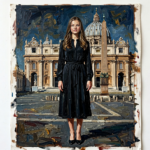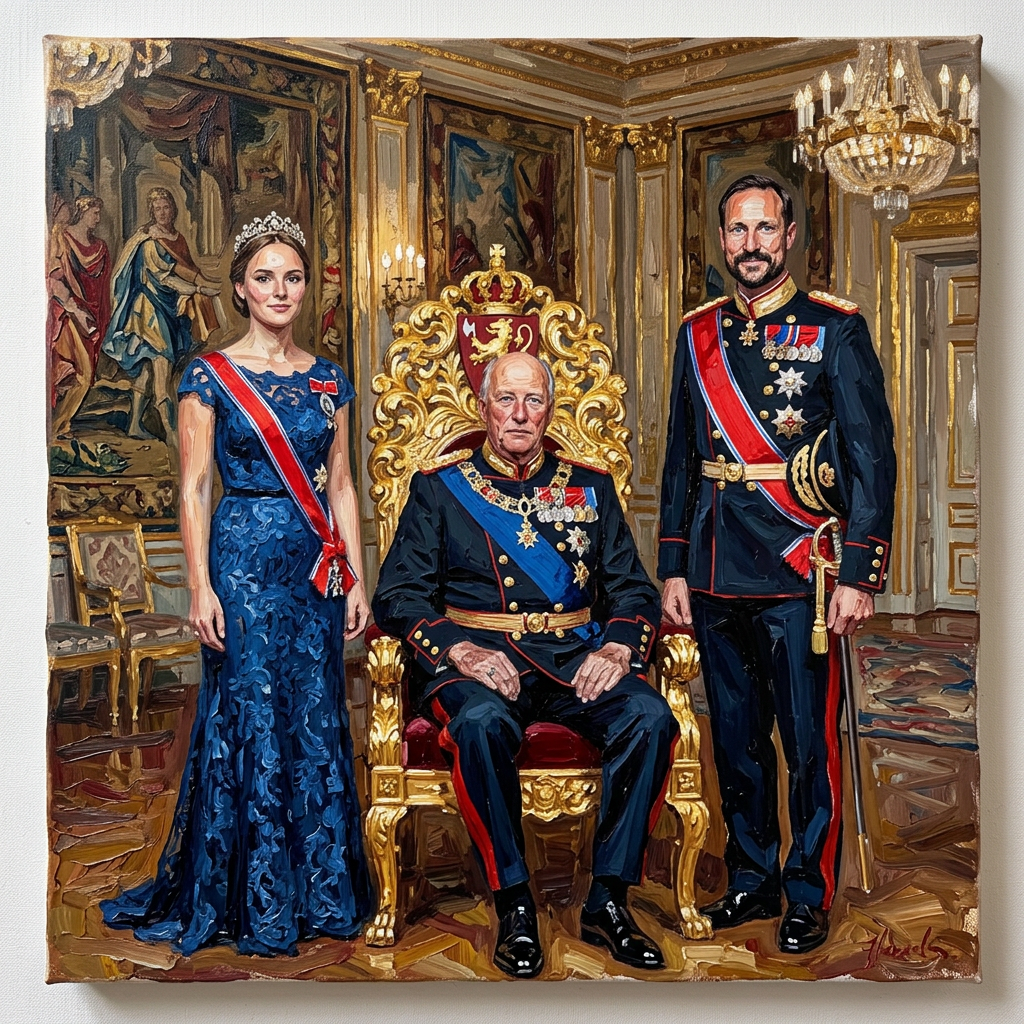
Norway’s future queen has spent the last several years training as a soldier, studying in Sydney, and quietly becoming the first woman in her family’s history for whom none of this required special permission.
As an Amazon Associate, Crown & Court earns from qualifying purchases.
When I lived in Copenhagen, I watched a young Danish princess grow up under constant, gentle observation, and I came to understand something the British press rarely discusses, which is that being raised as an heir is its own particular kind of childhood… lived partly in public, and partly in careful hiding from it. I think of that often when I think of Princess Ingrid Alexandra of Norway, who has spent these last few years doing both, an ocean away from the throne room she is training to one day occupy.
She was born on 21 January 2004, and the timing matters more than it might seem. Norway changed its constitution in 1990, replacing male-preference succession with absolute primogeniture, but the new rule only applied going forward, to children born after the change. Her father’s older sister, Princess Märtha Louise, was born before the amendment and never had a claim on the throne because of it. Ingrid Alexandra was born after, and so she simply is the heir, second in line behind her father, with no asterisk and no need for anyone to grant her an exception.
I find that detail tells you something true about how monarchies actually evolve. They rarely announce a revolution. They simply let enough time pass that the old objections quietly age out, and one day a girl is heir to a throne that, a generation earlier, would not have considered her eligible at all.
What has struck me most about Ingrid Alexandra, watching from a distance, is how ordinary her preparation has looked next to how extraordinary her eventual role will be. She completed her secondary education at Elvebakken in Oslo, then spent a year in the Norwegian Army’s Engineer Battalion, finishing her national service as so many of her countrywomen and countrymen do. After that, rather than settling into royal duties at home, she enrolled at the University of Sydney to study social sciences, choosing distance over proximity at exactly the age most heirs are expected to start standing closer to the throne, not further from it.
Not every Norwegian has agreed with that choice. There has been real public debate, some of it sharp, about the cost and the wisdom of educating a future monarch eight thousand miles from the institution she will one day represent. I understand the argument, and I do not think it is unreasonable. But I also think there is something quietly instructive in a future queen choosing to learn who she is somewhere her family’s history cannot answer the question for her.
Belgium settled a comparable argument in its own way back in 1991, when a constitutional amendment quietly rewrote who could inherit a crown without needing anyone’s permission to do so, and the parallel is worth sitting with. Two very different monarchies, a continent apart, arriving at the same conclusion a generation or two before the rest of Europe caught up: that a daughter does not need an exception. She only needs the law to stop treating her like one.
Scandinavians: In Search of the Soul of the North by Robert Ferguson has stayed with me since I first read it, and I think of it often when I write about Norway… it is less about kings and queens than about the temperament that produces them, patient, understated, in no particular hurry to announce itself.
Every future queen carries two childhoods at once: the one she lives for herself, and the one the country quietly watches and waits for. Ingrid Alexandra, for now, still seems to be managing to hold both.
Nadia Osei-Mensah is Crown & Court’s International Royals correspondent. Born in Accra, raised in Copenhagen, and educated in Tokyo, she is fluent in five languages and has spent her career covering the royal families the Western press too often overlooks.
“Every crown tells a different story. I’m here to translate.”