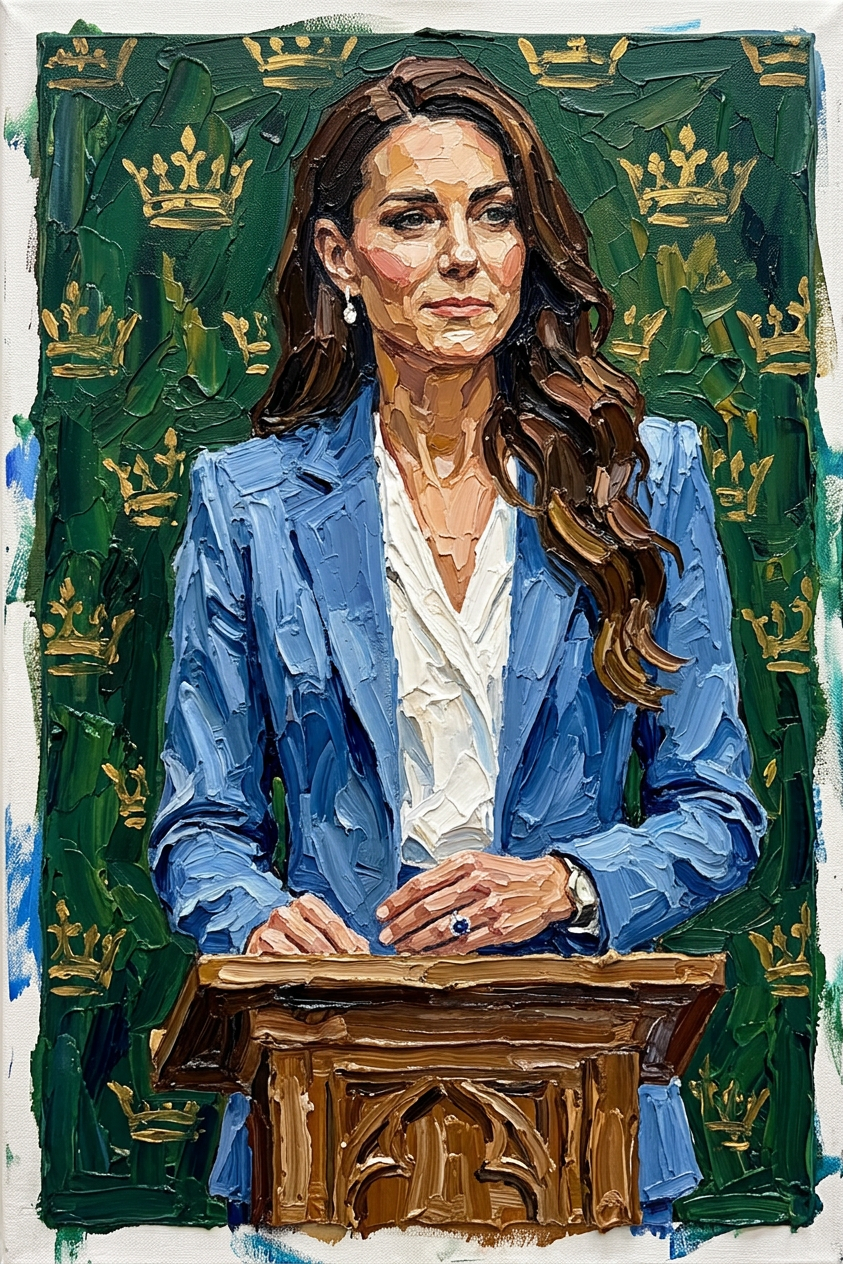
A decade of quiet groundwork, one national campaign, and a cause the Princess of Wales chose long before it was fashionable. Marcus Webb on the long game.
The Princess of Wales has one signature cause. Early childhood. She did not arrive at it by accident. She built it. Brick by brick. Over more than ten years.
Most people date her interest to 2023. That is when the Shaping Us campaign launched and the headlines followed. They are roughly a decade late.
Go back to January 2020. The then Duchess of Cambridge launched a survey called 5 Big Questions on the Under Fives. It was run with Ipsos MORI. It asked the public what they thought about raising children in the earliest years. Hundreds of thousands responded. It remains one of the largest surveys of its kind conducted in Britain. Later that year she gave a keynote at an online early years forum, setting out what the findings meant.
That was the groundwork. The rest followed in order.
In June 2021 she launched The Royal Foundation Centre for Early Childhood. This was the institution. Not a photo opportunity. A standing body with staff, research partners and a remit. Its first report was titled Big Change Starts Small. It was produced with Harvard University and the London School of Economics. The Princess was not lending her name to the science. She was commissioning it.
In February 2022 she went to Denmark. Not for ceremony. To study. She visited the University of Copenhagen and a forest school outside the city, where teaching is built around social and emotional development rather than early academics. The Danish approach to the early years is regarded as among the best anywhere. She went to learn from it and to see what the Centre could borrow.
Then the campaign. Shaping Us launched at the end of January 2023. The aim was blunt. Change how the public understands the first five years of a child’s life. The Centre had the data to explain why that mattered. At launch it reported that around one in three adults knew little or nothing about how children develop in early childhood. A separate survey found only 17 per cent of the public identified the period from pregnancy to age five as the most important for shaping a child’s future. The campaign existed to move those numbers.
She did not stop at awareness. In March 2023 she established the Business Taskforce for Early Childhood. Eight major British companies signed up. Among them NatWest, Unilever, Aviva, Deloitte, IKEA, the Lego Group, Co-op and Iceland. The first meeting was held on 21 March 2023 at NatWest’s London headquarters. The point was practical. Get business to treat early childhood as an economic issue, not a charity line.
In May 2024 the Taskforce published its report. It set out the business case and named the areas where companies could act. In November 2023 the Centre had already convened a national symposium, pulling specialists and global thinkers into one room for the first time. In November 2025 came a Future Workforce Summit in London. This was no longer a conversation. It was a strategy with a calendar.
Look at the pattern. Survey. Institution. Research. International study. Public campaign. Business coalition. Report. Summit. Each step built on the last. None of it was improvised.
One further detail is worth noting. The work carried on through her cancer treatment and her return to public life. The cause did not pause when she did.
Critics have a fair point. Awareness is not funding. The early years sector has said so directly. It wants lasting investment, not just attention. That is a legitimate challenge. The Princess has taken the role of convenor rather than funder, and whether that is enough is a debate that will run.
But the charge that this is a hobby does not survive the record. Ten years. One idea. Followed methodically, in public, at her own pace.
The palace rarely explains its long term thinking. In this case it did not need to. The dates explain it.
Watch where the Business Taskforce goes next. That is the point where this stops being a campaign and starts becoming policy.
Marcus Webb is Crown & Court’s Royal News Correspondent. Fleet Street trained, he has covered the British monarchy for twenty years and reports it plainly. No fairy tales. Just the facts and what they mean.
“The palace says nothing. Which tells you everything.”