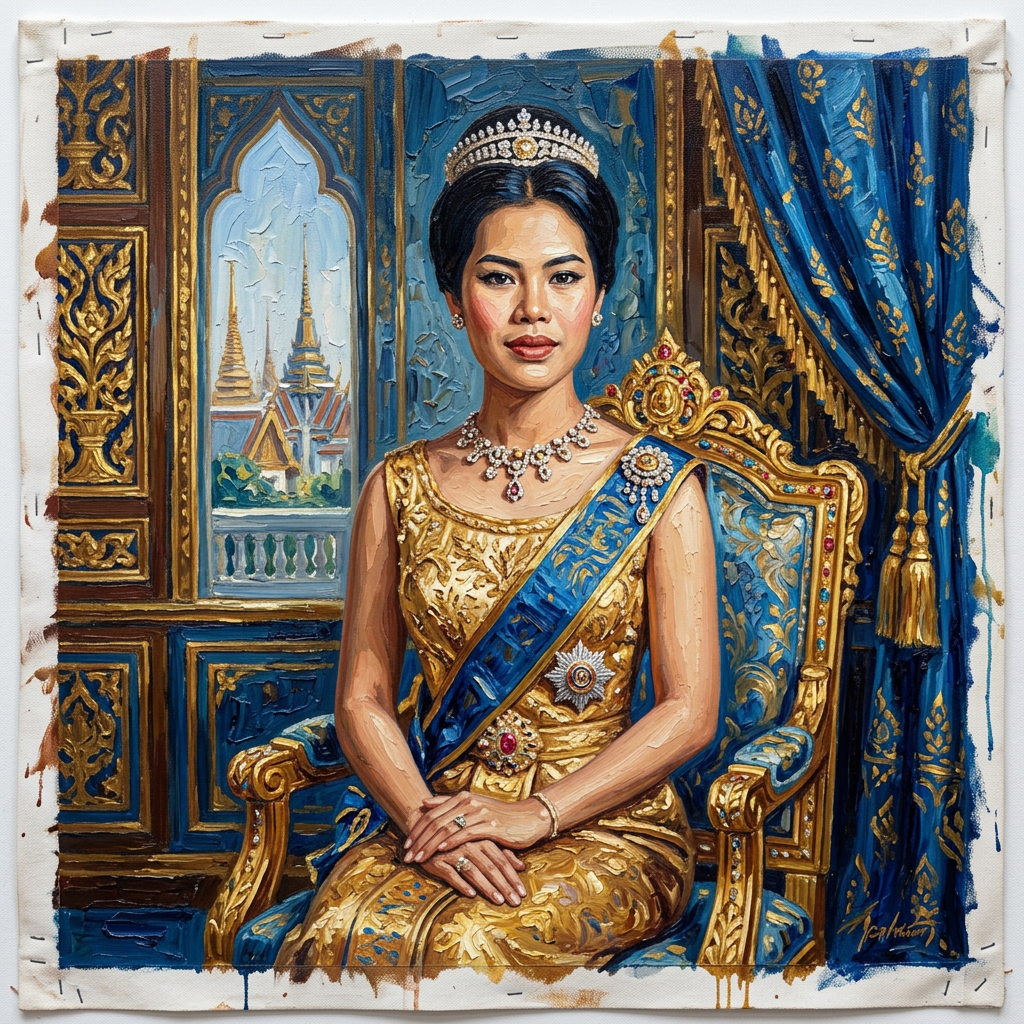
When Her Majesty Queen Sirikit the Queen Mother passed away in October 2025, Thailand did not simply observe a protocol. It stopped. The 100-day memorial that followed revealed something about the Thai monarchy that the Western press rarely pauses long enough to understand.
I have watched many countries mourn their monarchs.
I watched Britain mourn Queen Elizabeth II in September 2022 — the extraordinary queues, the silent crowds, the collective exhale of a nation that had not fully understood how much she meant until she was gone. I watched Denmark mourn with quiet Nordic dignity when its own royal transitions arrived. I have covered grief in many royal contexts, in many languages, across many cultures. What I witnessed in Thailand between October 2025 and January 2026 was something different. Something I want my colleagues in London and New York to understand, because most of them did not cover it at all.
Her Majesty Queen Sirikit the Queen Mother passed away on 24 October 2025 at the King Chulalongkorn Memorial Hospital in Bangkok, aged 93, following a bloodstream infection. She had been in declining health for some years. The announcement, when it came, set in motion one of the most elaborately structured mourning traditions in the world — a series of Buddhist merit-making ceremonies scheduled at the seventh, fifteenth, fiftieth, and hundredth days following her passing, each observed simultaneously at government houses, temples, embassies, and consulates across Thailand and around the world.
The cultural context here is essential and I want to be precise about it. The Thai monarchy’s relationship with the Thai people is not simply political or constitutional. It is, for many Thais, profoundly spiritual. The monarchy draws its legitimacy in part from the Buddhist concept of merit — the accumulated virtue of past lives made visible in present station. To be born royal, in this tradition, is to have earned it. To mourn a queen, therefore, is not merely to mark a death. It is to honour a life of extraordinary accumulated merit, and to make merit of one’s own through the act of mourning.
This is why the 100-day memorial on 31 January 2026 looked the way it did. At Government House in Bangkok, Prime Minister Anutin Charnvirakul led approximately 900 participants — cabinet members, senior officials, representatives of every religious community in the country — in a merit-making and alms-giving ceremony before a portrait of the Queen Mother. Ten monks received offerings of robes and alms food. Ninety-three monks participated in the alms-giving ceremony on the lawn — ninety-three, one for each year of her life. The ceremony concluded with a 93-second moment of silence. Every number was deliberate. Every gesture was calibrated. That is what royal mourning looks like when it is genuinely felt.
At the Grand Palace, the 100-day royal rites took place at the Dusit Maha Prasat Throne Hall, one of Thailand’s most sacred ceremonial spaces, built in the eighteenth century and used for the lying in state of Thai monarchs for generations. Queen Sirikit’s remains lay there throughout the mourning period, allowing ordinary Thais to come and pay their respects at the Royal Urn. Hundreds of thousands did. They came from Bangkok and from the provinces. They came in traditional mourning dress. They came because they wanted to, not because they were asked.
Beyond Thailand’s borders, Thai embassies and consulates on every continent organised parallel ceremonies. In New York, in Jakarta, in Chicago — wherever Thai communities exist, they gathered at local temples to make merit and observe a moment of silence. The mourning was not contained within a geography. It travelled with the diaspora, which is to say it travelled everywhere the Thai people are.
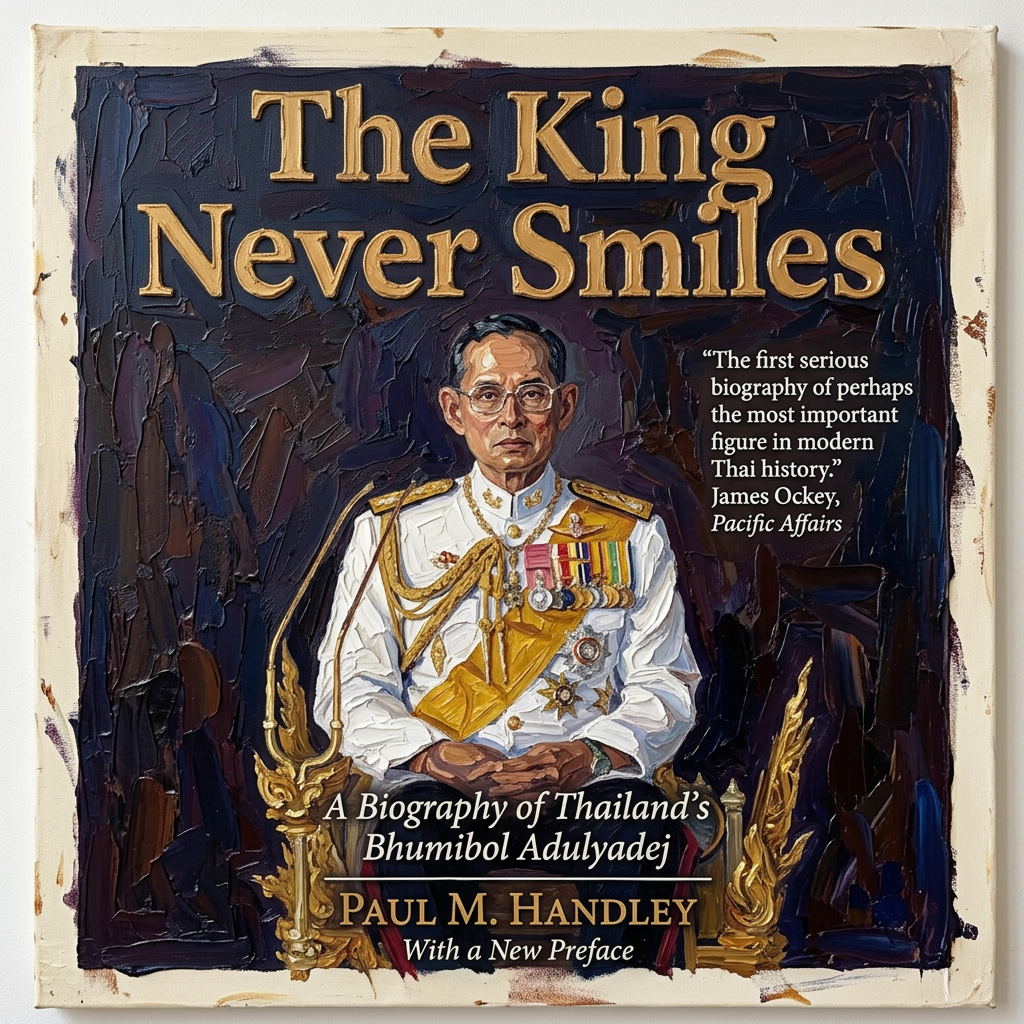
Queen Sirikit was 93 years old. She had served as Queen Consort and later Queen Mother for decades alongside King Bhumibol Adulyadej, one of the most revered monarchs in modern history. She was known for her advocacy of Thai traditional crafts and textiles, her dedication to rural development, and her extraordinary presence at her husband’s side through decades of political turbulence. The affection was real. The grief was real. The ceremonies were not a performance of mourning. They were mourning, structured by tradition into something that could be shared.
My colleagues in London were, that weekend in January, focused on other things. I understand why. The British royal calendar had its own demands. But I think they missed something worth knowing: that on the other side of the world, a nation of 70 million people paused together, lit incense before a portrait, and said thank you to a woman who had spent her life in service to them.
That is monarchy at its most fundamental. Not pageantry. Not politics. Simply this: a country and its crown, facing loss together.
“Every crown tells a different story. I’m here to translate.”
Nadia Osei-Mensah is Crown & Court’s International Royal Correspondent. Born in Accra, raised in Copenhagen, and educated in Tokyo, she is fluent in five languages and equally fluent in the customs and complexities of royal families from every corner of the globe.
“Every crown tells a different story. I’m here to translate.”