A princess who might have steadied the succession has died. A king with seven children has named none of them. And a monarchy with no republican exit ramp is running out of time to answer the most basic question any throne must answer.
King Vajiralongkorn has seven children.
Seven. From four marriages. And he has named precisely none of them as his heir.
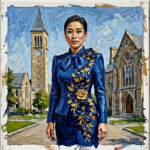
This was a manageable problem when Princess Bajrakitiyabha was alive. Not solved. Not addressed. But manageable. She was the eldest. She was educated, accomplished, genuinely respected. She held UN credentials and a Cornell doctorate and the kind of public affection that cannot be manufactured by a palace communications team. She had not been named heir. But she was there. Her presence provided a kind of unofficial ballast to a succession question the king has consistently refused to answer formally.
She died on 11 June 2026. The ballast is gone.
Let us look at the facts. Prince Dipangkorn Rasmijoti is the king’s only son with a formal title, making him the presumptive heir under succession rules that favour men. He is the youngest of the king’s children. He has a developmental disability. His mother, the king’s third wife, was stripped of her royal titles in 2019. The king has not commented publicly on his son’s succession prospects. The palace has not commented publicly on any succession prospects. Thailand’s lese-majeste laws ensure that almost nobody else is in a position to comment publicly either, under penalty of up to fifteen years in prison per charge.
This is not a succession plan. It is the absence of one, protected from scrutiny by law.
I want to be precise about what I am not saying. I am not saying Prince Dipangkorn cannot or should not reign. I am not speculating about his capabilities or his future. I am saying that a monarchy with no publicly named heir, no transparent succession framework, and a legal system that criminalises the very conversation needed to address the problem is a monarchy that is one unexpected death away from a constitutional crisis.
Thailand has been one unexpected death away from that crisis since December 2022, when Princess Bajrakitiyabha collapsed and never woke up. The three and a half years of her hospitalisation should have been used to address the succession question seriously. They were not. The king’s silence continued. The palace’s silence continued. The law ensured that almost everyone else’s silence continued too.
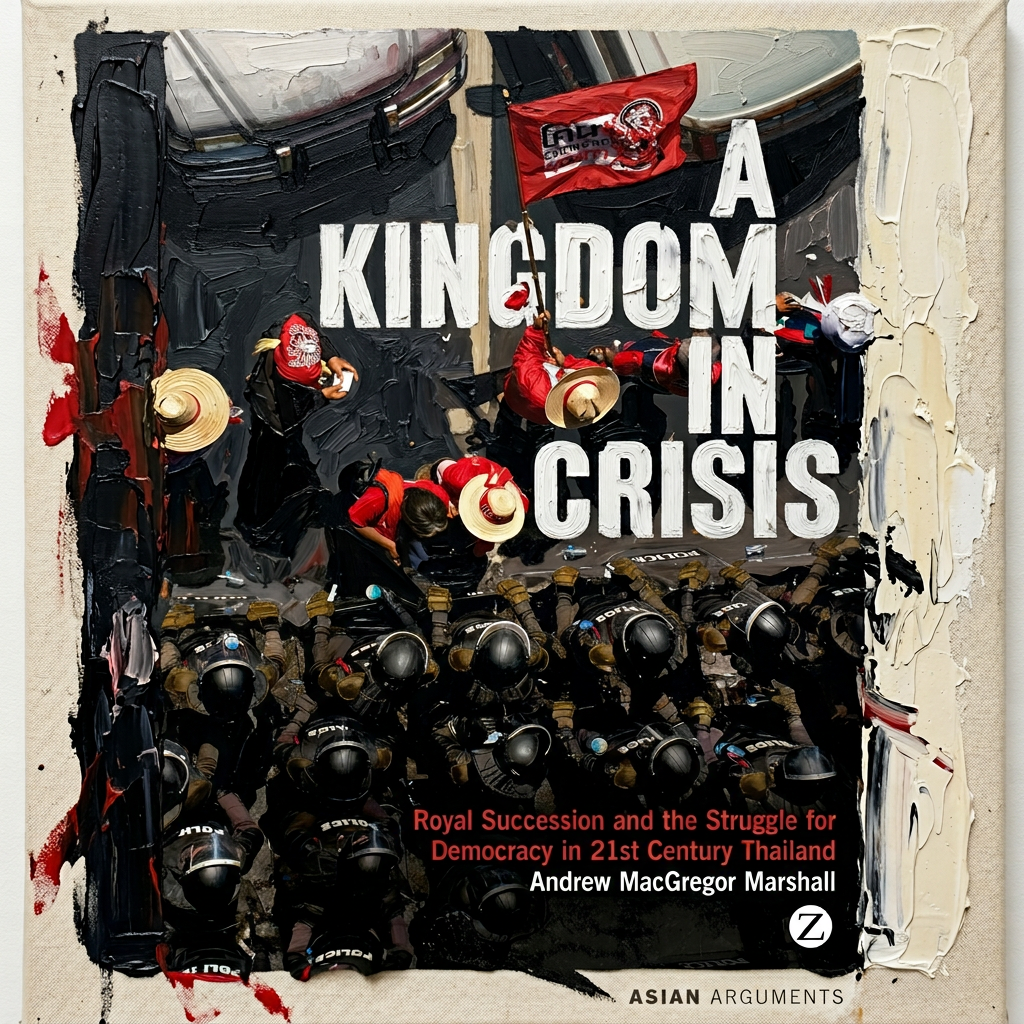
The Thai monarchy has survived extraordinary pressures in recent decades. The protest movements of 2020 and 2021, which explicitly called for curbs on royal power, were suppressed but not resolved. The underlying tensions between the institution and a younger generation of Thais who do not share their parents’ reverence for the Crown have not disappeared. They have been managed, through legal mechanisms that are increasingly difficult to apply in an era of social media and international scrutiny.
A monarchy navigating those pressures needs clarity at its centre. It needs an answer to the question every monarchy must eventually answer: who comes next, and why, and when.
Thailand does not have that answer. It has a presumptive heir whose position has never been formally confirmed. It has a king who has shown no inclination to address the question publicly. And it has just lost the woman who, whatever her formal role, represented the institution’s most credible human face to the outside world.
This is fixable. Succession frameworks can be established. Heirs can be named. Institutions can choose transparency over silence when silence is no longer serving them.
Whether anyone in Bangkok has the will to do it is a different question entirely.
Daniel Harte is Crown & Court’s Opinion Columnist. A political commentator and self-described reluctant monarchist, he has strong opinions about the institution, its failures, and its future, and absolutely no patience for spin.
“The monarchy survives on myth. Let’s look at the facts.”