A private wedding in a Gloucestershire village contained a more persuasive argument for the monarchy’s future than any jubilee, coronation, or carefully managed press release. The question is whether the institution is paying attention.
Let us start with what did not happen on Saturday.
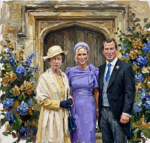
There was no balcony. No procession down the Mall. No military escort, no state carriages, no Archbishop of Canterbury. No global television audience. No merchandise. No commemorative anything. A man married a woman in a village church in Gloucestershire, his family attended, and then they all went to his mother’s house for lunch.
And it worked. Brilliantly.
This matters more than it might appear. The monarchy is currently engaged in a slow, largely unacknowledged argument with itself about what it is supposed to be. On one side: the case for grandeur. Pageantry. The full weight of a thousand years of history deployed at regular intervals to remind a sceptical public why the institution deserves its position. On the other: the case for something quieter. More human. More difficult to dismiss.
Peter Phillips, without intending to make an argument at all, made the second case more convincingly on Saturday than the palace communications team has managed in years.
Consider who was in that church. King Charles III. Queen Camilla. The Prince and Princess of Wales. Princess Anne. Zara and Mike Tindall. A full complement of working royals, gathered not for a state occasion but for a family one. No choreography. No formal programme. Just people who share a family turning up because that is what families do. The cameras caught them arriving and departing. They looked, for once, like themselves.
This is not a small thing. Public trust in institutions — all institutions, not merely royal ones — is under sustained pressure across the democratic world. The organisations that are weathering that pressure most successfully are not the ones deploying more spectacle. They are the ones demonstrating authenticity. The ones that occasionally remember how to be human in public.
The monarchy has a generational problem. I have written about it before and I will write about it again because it has not gone away. Young British adults are less convinced of the institution’s value than any previous generation. That gap does not close with pageantry. It does not close with carefully worded statements or strategically released photographs. It closes — if it closes at all — with moments that feel real.
Saturday felt real.
Harriet Sperling is a paediatric nurse. She has a teenage daughter. She met Peter Phillips, by most accounts, through their children. She spent two years attending family occasions quietly and competently before walking down the aisle. There is nothing in that story that requires explanation or defence. It is simply a recognisable human life, lived in proximity to an institution that does not always manage to seem recognisable or human.
The palace did not orchestrate Saturday. That is precisely why it worked.
I have been a reluctant monarchist for twenty years. Reluctant because the institution regularly makes it difficult to defend. Reluctant because the gap between what the Crown claims to represent and what it sometimes demonstrably is can be, to put it diplomatically, considerable. But moments like Saturday remind me why the argument for the monarchy is not purely historical or constitutional. It is, at its best, human.
The question is never whether the monarchy can produce these moments. It clearly can. The question is whether anyone in the institution is studying them carefully enough to understand why they work — and whether they have the wit and the will to produce more of them deliberately.
The clock is running. The palace should probably stop admiring the architecture and start doing the work.
Daniel Harte is Crown & Court’s Opinion Columnist. A political commentator and self-described reluctant monarchist, he has strong opinions about the institution, its failures, and its future — and absolutely no patience for spin.
“The monarchy survives on myth. Let’s look at the facts.”