The eldest grandchild of Queen Elizabeth II married quietly in Gloucestershire this week — and in doing so, demonstrated something his grandmother understood better than almost anyone: that the most durable royal legacy is not title, but character.
There is a question I have put to every undergraduate who has sat in my seminars on dynastic history: what does a monarchy owe its peripheral members?
It is not a question that appears in the standard texts. It is not debated at constitutional conferences or addressed in the Letters Patent that define royal precedence. And yet it is, in my assessment, one of the most consequential questions any royal house must answer — because the answer shapes not merely the lives of those on the edges of the family tree, but the long-term health of the institution at its centre.
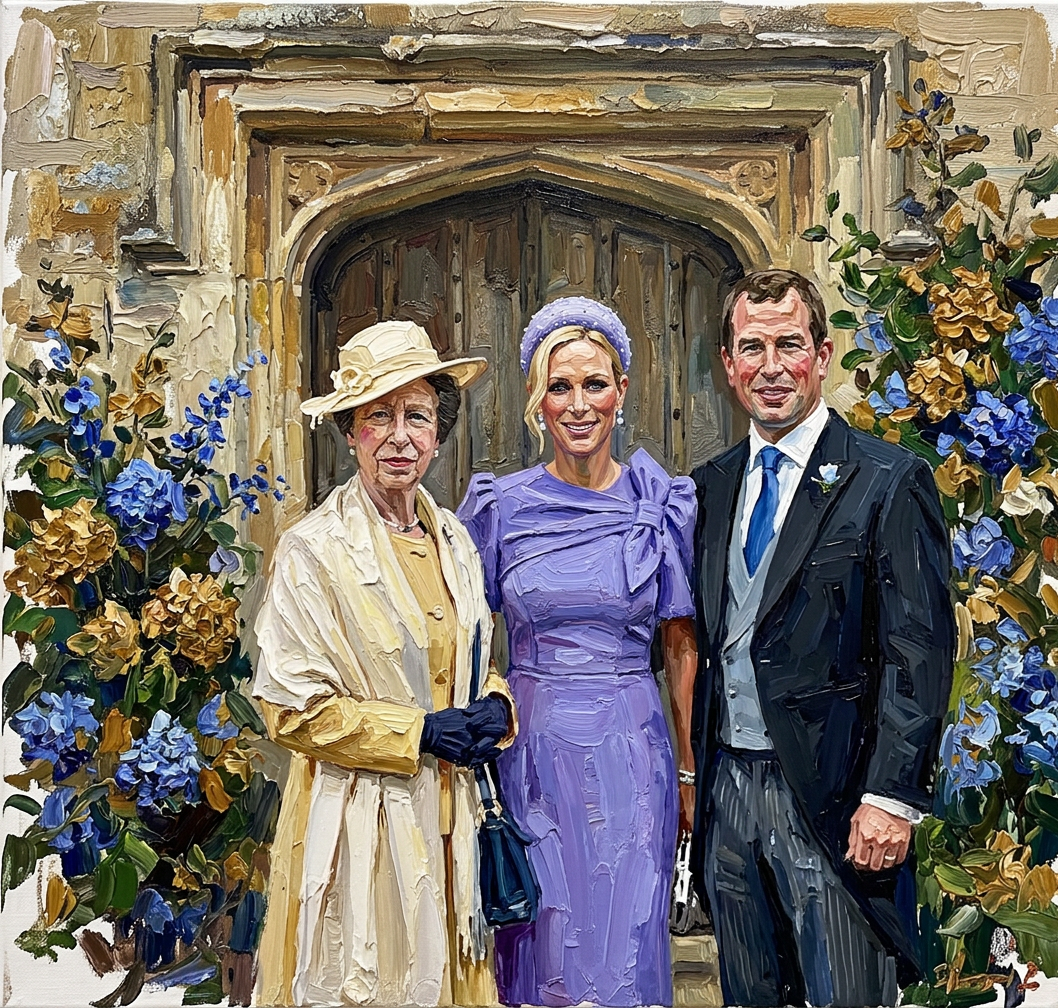
Princess Anne answered it, in her characteristically direct fashion, sometime in the 1970s. Her children would not be princes or princesses. They would hold no HRH. They would be, as far as the machinery of modern life permitted, ordinary. Peter Phillips and his sister Zara Tindall grew up at Gatcombe Park in Gloucestershire, attended local schools, pursued careers in the private sector, and built lives that the vast majority of their grandmother’s subjects would recognise without difficulty. It was, by the standards of European dynastic history, a radical experiment. It was also, one is tempted to conclude, a successful one.
The historical record is instructive here. The problem of the extended royal family — what German constitutional historians have sometimes called the Prinzenmasse, the accumulation of princes — has bedevilled European monarchies for centuries. The Habsburgs understood this, eventually; their vast network of archduchesses and archdukes became, over generations, an administrative and financial burden that contributed in no small measure to the dynasty’s difficulties. The Romanovs, more catastrophically, failed to address it at all. The House of Windsor, by contrast, has spent the better part of a century engaged in a careful, if sometimes painful, process of contraction — defining ever more precisely who belongs to the working institution and who belongs simply to the family.
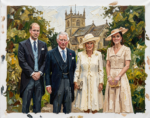
Anne’s decision regarding her children sits squarely within this tradition; it is, in dynastic terms, a piece of intelligent long-term housekeeping. Peter Phillips has spent his adult life demonstrating its wisdom. He has worked in sports management and the motor industry. He has navigated a divorce with the quiet dignity that his grandmother modelled throughout her own reign. He has raised two daughters — Savannah and Isla — in the same Gloucestershire landscape that shaped him. And on 6 June 2026, he married Harriet Sperling, a paediatric nurse from the same county, in a village church near the estate where he grew up, with his family gathered around him and no particular fuss made by anyone.
The parallels with his grandmother’s philosophy are instructive. Queen Elizabeth II believed, with a consistency that historians have only recently begun to appreciate fully, that the monarchy’s survival depended not on its grandeur but on its legibility — on the capacity of ordinary people to find within it something recognisably human. She was not, it should be said, sentimental about this. She was strategic. The walkabouts, the Christmas broadcasts, the careful management of royal visibility — all of it was in service of a single proposition: that the Crown was not remote, but present; not merely historical, but alive.
Peter Phillips, without a title and without a formal royal role, embodies that proposition perhaps more completely than any working royal could. He is the monarchy made legible; a man whose connection to the Crown is beyond question and whose life requires no explanation to any of his grandmother’s former subjects. What is often overlooked, in the commentary that attends royal weddings, is that figures like Phillips perform a function that the institution cannot perform for itself: they demonstrate that the values the Crown claims to represent — service, stability, quiet dignity — are not merely ceremonial. They are lived.
History does not always announce its most significant moments in advance. The weddings that altered the course of dynasties were not always the grandest ones; sometimes they were the quietest, the most considered, the most human. Whether Saturday’s ceremony in Kemble will be remembered as historically significant in any formal sense is, at this distance, impossible to say. What one can say, with rather more confidence, is that it represented something the historical record consistently rewards: a family that knows what it is for.
Edmund Calloway is Crown & Court’s Royal Historian. A retired professor of European dynastic history with thirty years at Oxford, he writes about the kings and queens history forgot — and the ones it remembers rather too selectively.
History doesn’t repeat itself — but dynasties certainly do.