Crown Chronicles: history that still shapes the throne.
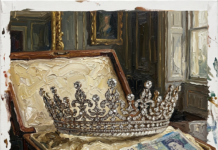
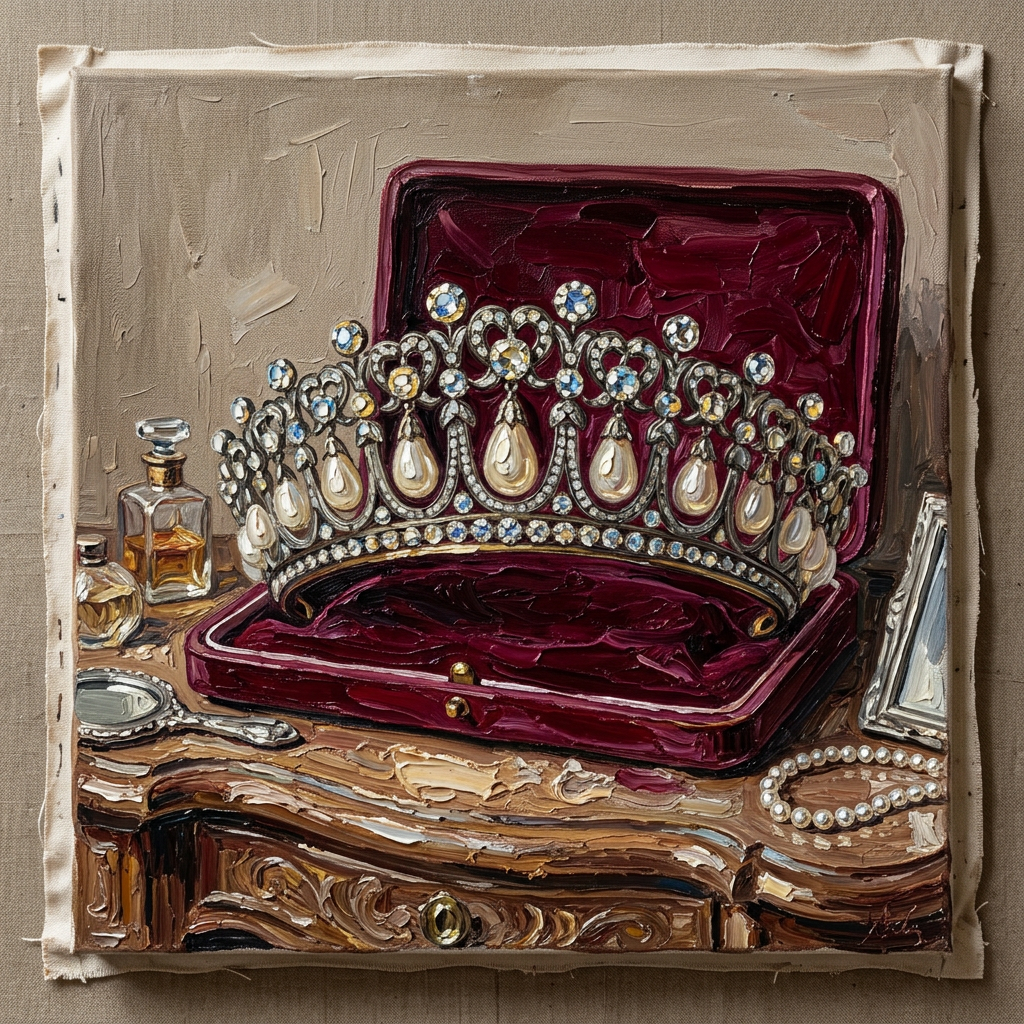
A tiara is not jewelry. A tiara is inheritance you can see from across a ballroom, and no piece in the royal vault proves that better than the Cambridge Lover’s Knot.
Queen Mary commissioned it in 1913, and she didn’t invent the design. She copied it, deliberately, from a tiara owned by her own grandmother, Princess Augusta of Hesse, Duchess of Cambridge. Garrard, the Crown Jeweler, built nineteen diamond archways and hung pearls beneath every one of them, with more pearls standing upright on top until Mary later had those removed. She wasn’t decorating herself. She was writing herself into a lineage that already existed, using a shape that had been worn by Cambridge women since 1818.
That instinct is the whole story of how royal jewelry actually works. It is never new. It is borrowed, copied, melted down and remade, passed hand to hand until the metal itself becomes a kind of family record. When Mary died in 1953, the tiara went to her granddaughter, the new Queen Elizabeth II, who wore it constantly through the 1950s before retiring it to the vault in favor of other favorites.
Then, in 1981, Elizabeth did something pointed. She gave the Lover’s Knot to her new daughter-in-law, Diana, as a wedding gift, and Diana wore it so often, so beautifully, that the tiara stopped belonging to history and started belonging to her. It became one of the most photographed pieces in the entire royal collection, inseparable from the image of a young, watched, increasingly unhappy Princess of Wales. When Charles and Diana divorced in 1996, the tiara went back to the palace vaults, because Diana had been given the role, not the woman. She kept the gifts that were personal. She didn’t keep this one.
It sat untouched for almost two decades. Then in December 2015, a new Duchess of Cambridge wore it to a diplomatic reception at Buckingham Palace, and the tiara came back to life in the hands of Kate Middleton, whose wardrobe evolution has made her one of the most closely tracked dressers in royal history. She has worn it more than any other piece in her collection since, and there is a quiet correctness to that. The tiara was modeled on a design tied to the Cambridge title. Catherine wore the Cambridge title first, before she ever wore the Wales one. The jewelry and the woman, for once, lined up.
What makes the Lover’s Knot worth writing about, more than a century after Garrard built it, is that it has never belonged to any one woman for long. It belonged to Mary’s idea of inheritance, then to Diana’s idea of visibility, then to Catherine’s idea of continuity. Three different women used the exact same diamonds to say three completely different things, and the tiara let them. That’s not an accident of craftsmanship. That’s the entire point of a crown jewel: it outlasts whoever’s wearing it, and it means something different every single time.
If you want the long version of how royal dressing became its own language, Lydia Edwards’ How to Read a Dress is the sharpest place to start, even though it isn’t only about royals.
A royal never gets dressed by accident. A tiara like this one was never just worn either. It was handed down like an argument nobody’s finished having yet.
Vivienne St. Claire is Crown & Court’s Fashion & Style Correspondent. A former fashion editor with two decades cataloguing royal wardrobes worldwide, she believes every wardrobe choice is a political act.
“A royal never gets dressed by accident.”