Crown Chronicles: history that still shapes the throne.
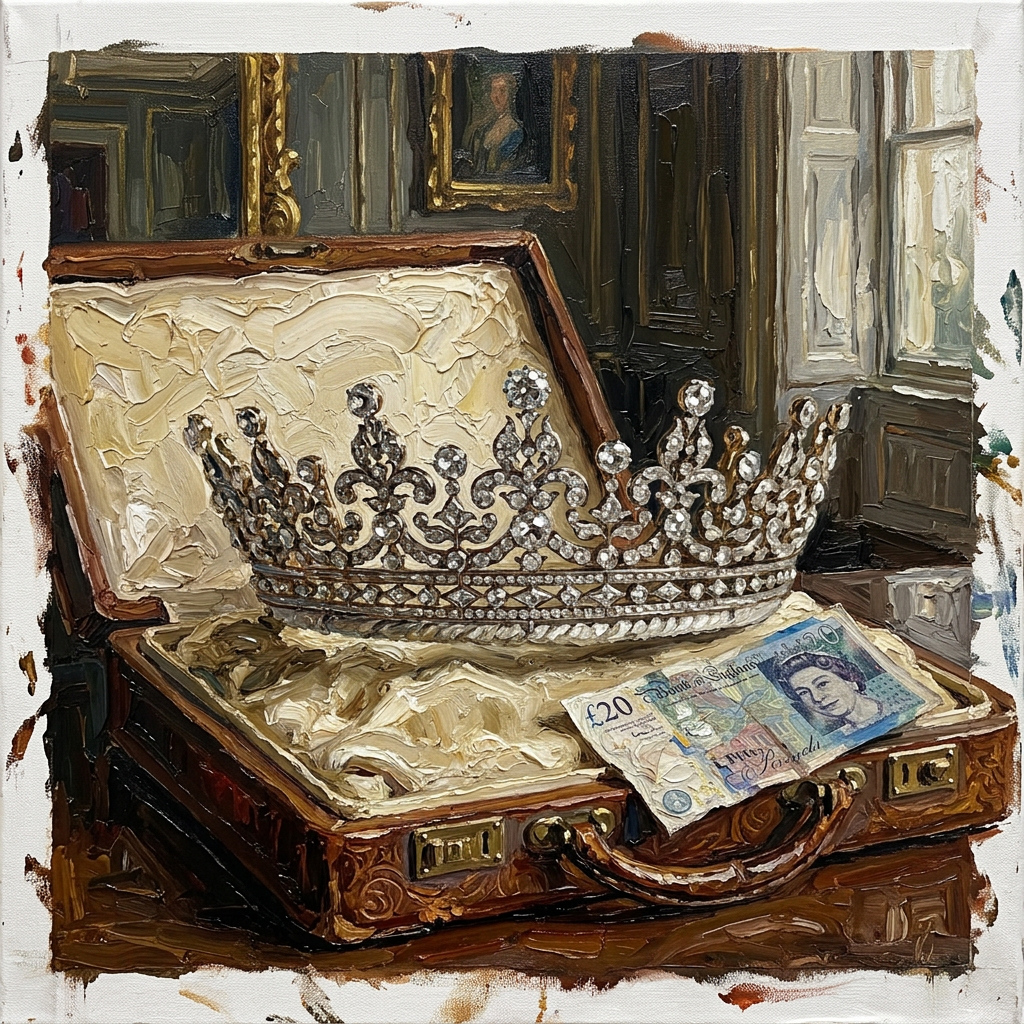
There is a tiara so familiar that most people in Britain have held it in their hands without ever knowing it. It appears on banknotes. It appears on coins. It appeared on postage stamps for decades. The face wearing it changed, eventually, but the tiara itself has been one of the most reproduced images in the English-speaking world for the better part of a century. It is called the Girls of Great Britain and Ireland Tiara, and its origin story is so strange and so moving that the name almost undersells it.
It begins with a death. In December 1891, Princess May of Teck became engaged to Prince Albert Victor, Duke of Clarence, the eldest grandson of Queen Victoria and the man expected one day to be king. Within weeks, a committee of young women led by Lady Eva Greville had already begun raising funds for a magnificent wedding gift. Then, in January 1892, Eddy, as the prince was known, died of influenza. The engagement had lasted six weeks. The committee had a tiara and nowhere to send it.
May eventually married Eddy’s younger brother George, Duke of York, in 1893, and Lady Eva’s committee sent the tiara to the right bride after all, two years late. They had raised over five thousand pounds. The surplus, at May’s personal request, went to the widows and children of sailors lost when the HMS Victoria sank that same year. The tiara that eventually arrived at the wedding was built by E. Wolff and Co. on commission from Garrard, the Crown Jeweler: diamond fleur-de-lis and festoon motifs, topped with fourteen large baroque pearls, convertible into a necklace and a coronet both. May wrote to Lady Eva that it would “ever be one of my most valued wedding gifts.” She was not being polite. She wore it constantly.
In 1914, now Queen Mary, she returned it to Garrard and had the baroque pearls replaced with thirteen diamond brilliants. The pearls did not disappear. They were incorporated into a new commission from Garrard: the Cambridge Lover’s Knot Tiara, which became its own chapter in royal jewelry history. Mary then separated the bandeau base so the piece could be worn two ways, ensuring the tiara she’d loved for twenty years could do even more work.
It did. When Princess Elizabeth married Prince Philip in November 1947, Queen Mary gave the tiara to her granddaughter as a wedding gift. Elizabeth was twenty-one. The bandeau base stayed with Mary, who reportedly said: “I suppose she thought, the child’s only 21, she doesn’t need a very big one.” Elizabeth had the base reattached in 1969. By then, she had already worn the tiara for the Dorothy Wilding portraits that would define the image of the new queen on British coins and banknotes for decades. The fleur-de-lis silhouette became, quietly, the most democratically distributed royal jewel in history. Anyone who had used British currency had spent decades carrying a small replica in their pocket.
Elizabeth wore it until late in her reign. Queen Camilla wore it for the first time in October 2023, pairing it at a Mansion House reception with the South African Diamonds, another piece that had entered the collection as an Elizabeth wedding gift in 1947. Whether it will become one of Camilla’s signature pieces or continue as an occasional loan from history remains to be seen.
What I keep returning to, looking at this tiara, is the committee that built it. Lady Eva Greville and her friends set out to buy a wedding gift for a princess they admired, lost their groom before the wedding happened, and waited two years to find the right moment to give it anyway. They also, entirely without planning to, created the most recognisable piece of jewelry in the history of the British monarchy. If you want to understand the difference between jewelry and inheritance, start here.
For the full history of how royal jewelry became its own language of power and meaning, Lydia Edwards’ How to Read a Dress is the place to start, even when the subject is diamonds rather than fabric.
Every jewel in the royal vault has a story. This one begins with women who never expected to be part of history, and ended up on every banknote in the realm.
Vivienne St. Claire is Crown & Court’s Fashion & Style Correspondent. A former fashion editor with two decades cataloguing royal wardrobes worldwide, she believes every wardrobe choice is a political act.
“A royal never gets dressed by accident.”