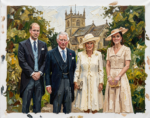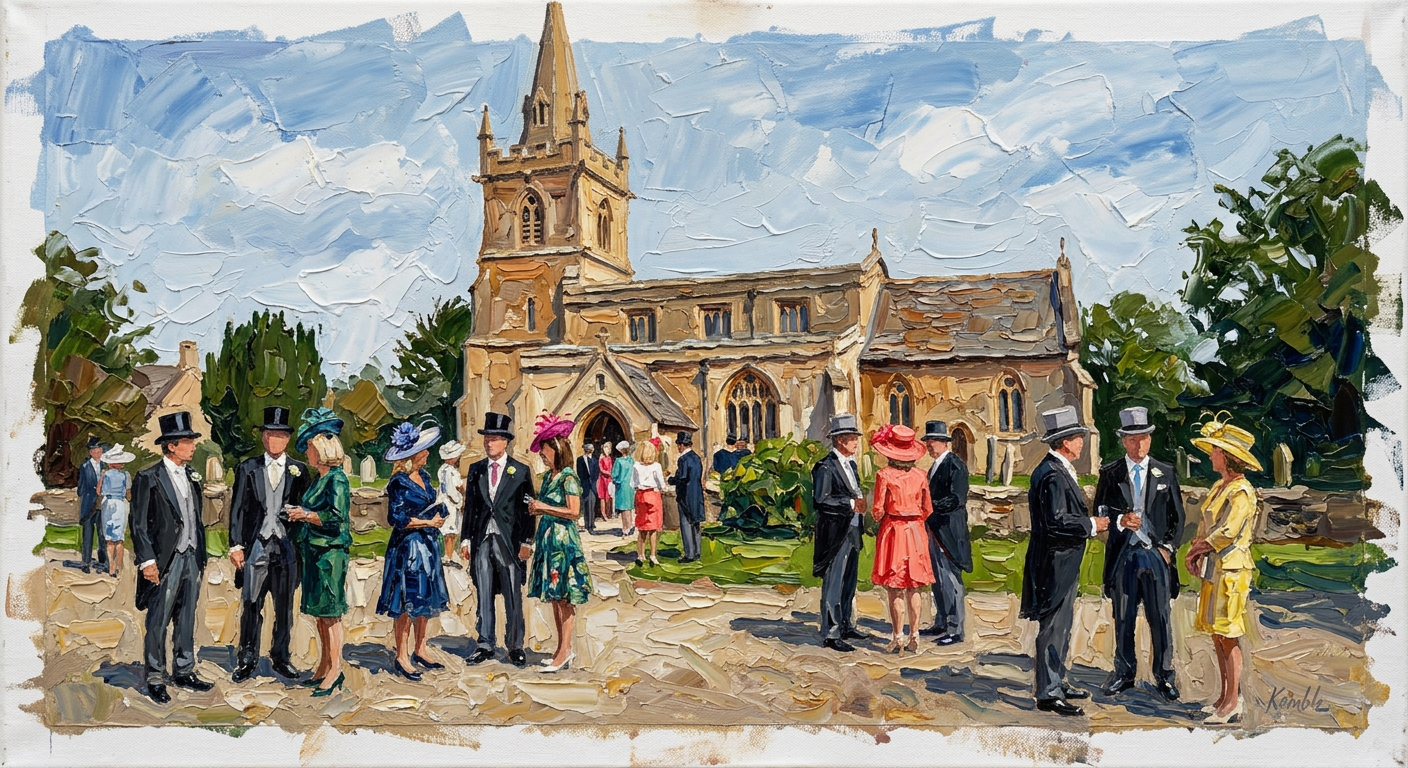
From a village church near Cirencester to a reception at Gatcombe Park, the wedding of Peter Phillips and Harriet Sperling was less a royal occasion than a family one — and all the lovelier for it.
There is something rather wonderful about a royal wedding that refuses to be a royal production.
Peter Phillips has always been that kind of Phillips. Queen Elizabeth’s eldest grandchild, yes. The son of Princess Anne, certainly. But also, unmistakably, a man who has quietly got on with things. He has built a life in Gloucestershire, close to the countryside he grew up in, close to his mother’s estate at Gatcombe Park, close to the schools his daughters attend. When it came time to marry Harriet Sperling, he chose a village church ten minutes from where she grew up. That tells you everything you need to know about what kind of wedding this was going to be.
All Saints Church in Kemble is not a grand royal chapel. It is not St. George’s Windsor or Westminster Abbey. It is a beautiful, ancient parish church in a Gloucestershire village, the sort of place that has marked the seasons of ordinary English life for centuries. Choosing it was a statement — not a loud one, but a clear one. This wedding belonged to the people in it, not to the institution behind them.
Harriet arrived with three bridesmaids who told the whole story of this blended family in a single glance. Her daughter Georgina walked alongside Peter’s daughters Savannah and Isla, all three dressed in matching Emilia Wickstead and flower crowns. Three teenage girls, three different family lines, one bridal party. I find that rather moving, if I am honest. The work that goes into that kind of harmony — the patience, the care, the years of Sunday lunches and school runs and Christmases navigated carefully — is invisible in the photographs. But it is there.
The reception moved to Gatcombe Park, Princess Anne’s Gloucestershire estate and the place Peter Phillips has called home since childhood. It is a working estate, unpretentious by royal standards, deeply rooted in the landscape of the Cotswolds. As a venue for a wedding reception it is not merely convenient. It is personal in the way that only a childhood home can be. The rooms Peter Phillips knows better than any palace ballroom. The gardens his mother has tended for decades. There is something quite right about beginning a new chapter of life in the place where so many earlier ones were written.
Harriet Sperling has spent two years being quietly assessed by the public, the press, and — one imagines — the family. She attended Balmoral last summer. She spent Christmas at Sandringham. She brought her daughter Georgina to the Easter service at St. George’s Chapel in April, which is not a casual invitation. By the time she walked into All Saints Church this morning, she was not a newcomer. She was someone who had already, in all the ways that matter, arrived.
King Charles and Queen Camilla were there. The Prince and Princess of Wales. Zara and Mike Tindall. Princess Anne and Sir Timothy Laurence. Captain Mark Phillips, the groom’s father, made a rare public appearance — sharing the occasion with his former wife in the way that only genuinely civilised people manage. The guest list reads like a family gathering because that is precisely what it was.
What strikes me most, thinking about this wedding, is how thoroughly it resisted becoming a moment. There was no balcony. No procession. No choreography for the cameras. Just a church, a family, a summer afternoon in Gloucestershire, and two people who have, between them, already learned a great deal about what marriage asks of you.
I think that is rather the point.
Charlotte Ashby is Crown & Court’s Culture and Lifestyle Editor. A country house enthusiast and unapologetic admirer of tradition, she writes about the way royals actually live — the homes, the rituals, and the family moments behind the pageantry.
“Behind every crown is a family —and families are always interesting.”