Crown Chronicles: history that still shapes the throne.
I have always found it rather touching that the British royal family is named after a castle. Not a battle, not a founding ancestor, not a centuries-old dynasty with roots going back to some distant European duchy. A castle in Berkshire. It is such a cheerfully practical solution to what was, in the summer of 1917, a very delicate problem indeed.
The problem was this: the family sitting on the British throne had a German name, a German queen, and a first cousin who was currently trying to bomb London. King George V had been on the throne since 1910. He was born in England, had served in the Royal Navy, and by most accounts was as thoroughly English in his habits and temperament as any man alive. His name was Saxe-Coburg and Gotha. It had been his family’s name since 1840, when his grandmother Queen Victoria married a German prince, Albert of Saxe-Coburg and Gotha, and their children inherited his house name along with everything else he brought to the marriage.
For seventy-seven years, this had been perfectly acceptable. Then the First World War arrived, and acceptable became impossible almost overnight. By 1917, three years into a conflict that had turned anti-German feeling in Britain from general discomfort into something considerably fiercer, the king’s name had become a liability. A writer named H.G. Wells had published an essay criticising what he called Britain’s “alien and uninspiring court.” The king, reportedly furious, replied that he was as English as Wells himself. The point stood, but the name did not help him make it.
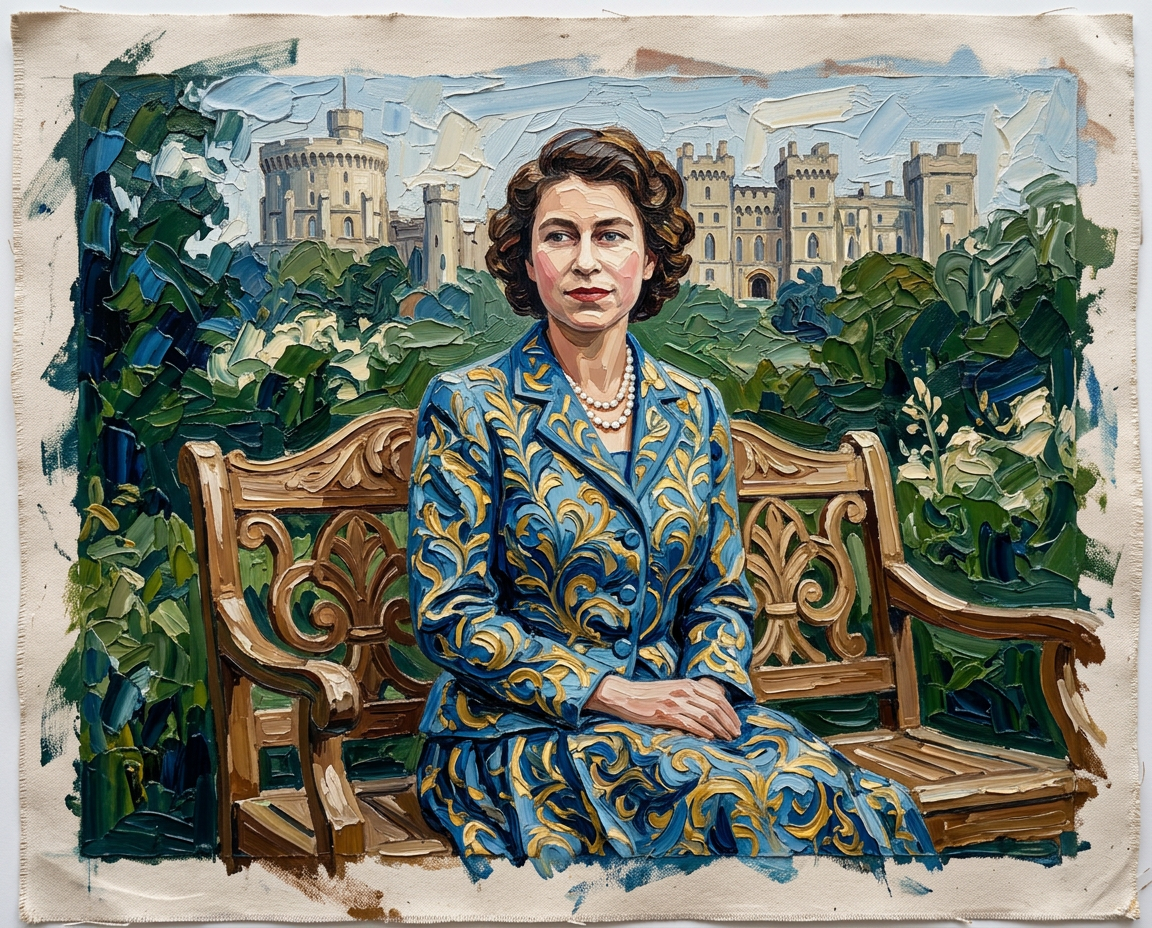
The man who solved the problem was the king’s private secretary, Arthur Bigge, 1st Baron Stamfordham, who looked at the royal residences and landed on Windsor Castle. It was the oldest and most recognisably English of all the royal homes, with royal connections stretching back to William the Conqueror in the eleventh century. On 17 July 1917, George V made a proclamation before the Privy Council: the royal house would henceforth be known as Windsor, and all descendants in the male line of Queen Victoria who were British subjects would bear that name. He also stripped his German relatives of their British titles and quietly encouraged the Battenberg family, who had married into the royal line through Queen Victoria’s daughter Princess Beatrice, to translate their name into English. They became the Mountbattens.
What I find most interesting, looking back at this moment, is how thoroughly it worked. The name Windsor settled into British life so completely that within a generation it simply felt correct, the way old furniture eventually stops looking new. There is a postscript worth noting too. When Queen Victoria transformed the monarchy’s public role through sixty-three years on the throne, she could not have anticipated that the German name her marriage created would one day become the very thing her great-grandson needed to discard to keep the institution she had saved. History has a very dry sense of humour about these things.
Kaiser Wilhelm II of Germany, who was George V’s first cousin and also a grandson of Queen Victoria, reportedly heard the news and announced that he was looking forward to attending a performance of “The Merry Wives of Saxe-Coburg-Gotha.” He was not wrong that it was a fiction of sorts. But the name change was also genuinely something more than that. It was a family deciding, publicly and formally, who they wanted to be. Families do this more often than we admit.
The House of Windsor has carried that chosen name through five monarchs and more than a century of history since. It has weathered abdication, war, scandal, and the slow reshaping of what monarchy means in a modern democracy. A castle in Berkshire turned out to be a rather solid thing to build a dynasty around.
If you want the fuller story of how the family built and rebuilt itself around that name across a century, Elizabeth Longford’s The Royal House of Windsor tells it the way it deserves to be told, as a family history first and an institutional one second.
Charlotte Ashby is Crown & Court’s Culture and Lifestyle Correspondent. A country house enthusiast and lifelong royal devotee, she writes about how royals actually live: the homes, the rituals, the family moments that rarely make headlines.
“Behind every crown is a family. And families are always interesting.”