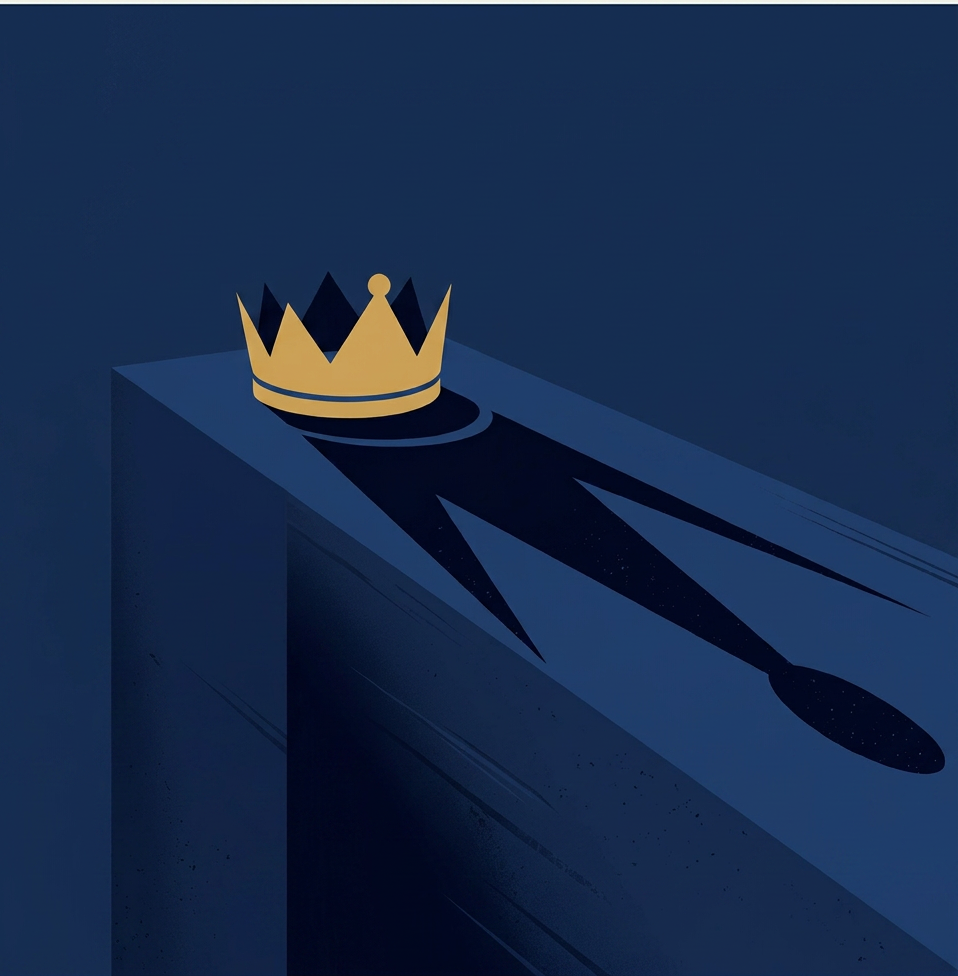
The numbers are in. Britain’s under-25s are walking away from the Crown. Daniel Harte on why the palace needs to stop celebrating its popularity and start worrying about its future.
Let’s start with the number nobody in royal circles wants to talk about.
Thirty-eight percent. That is the proportion of British 18 to 24 year olds who, when asked in April 2026 whether Britain should keep its monarchy or replace it with an elected head of state, chose the elected head of state.
Nearly four in ten young British adults. Gone. Not wavering. Not undecided. Actively preferring a different system entirely.
Now let’s look at the number the palace prefers to discuss.
Eighty-four percent of over-65s support the monarchy.
Wonderful. Except that over-65s are, by the unavoidable arithmetic of biology, not the future. They are the present and the recent past. The 18 to 24 year olds are the next fifty years of this institution’s existence. And nearly four in ten of them have already decided they’d rather have something else.
This is not a crisis yet. But it is the shape of one. And the monarchy — with its characteristic preference for hoping problems resolve themselves if ignored with sufficient elegance — does not appear to have a plan.
The Myth of Managed Decline
There is a comfortable story told in certain royal circles. It goes like this: young people have always been more republican. They grow up. They have children. They watch a coronation or a jubilee or a royal wedding and something shifts. They come around.
It is a reassuring story. It is also, increasingly, unsupported by evidence.
The scandals and crises of recent decades — from Diana’s death and its aftermath to the institution’s more recent turbulences — have shifted the terms of public debate in ways that simple maturation cannot reverse. These are not young people who haven’t yet formed their views. These are young people who have grown up watching an institution manage one controversy after another and have drawn their own conclusions.
You cannot crisis-manage your way to genuine popularity. You can only earn it.
What the Institution Gets Wrong
The monarchy’s response to its popularity problem has been, largely, to double down on what already works for its existing supporters. Pageantry. Tradition. The carefully choreographed moments of national unity that photograph magnificently and mean rather less than they appear to.
None of this is wrong, exactly. Pageantry is genuinely part of what the monarchy offers that no elected president ever could. The coronation of King Charles III was, whatever one’s constitutional views, an extraordinary piece of living history.
But pageantry alone does not build loyalty in a generation that has grown up with instant access to every piece of information about every institution, has watched those institutions repeatedly fail them, and has developed a finely calibrated detector for the difference between substance and performance.
They are not impressed by the theatre. They want to know what it’s actually for.
The Question Nobody Answers Cleanly
Ask a supporter of the monarchy what it does — what it actually, practically, constitutionally does — and you will receive a range of answers. Soft power. Tourism. National identity. The Commonwealth. Constitutional stability.
All of these are real. None of them are simple. And none of them are being communicated with anything approaching clarity to the generation that needs to be convinced of them.
The monarchy has historically served as a unifying force — an apolitical figurehead embodying national identity through decades of political turbulence. That is a genuine function. It is also a function that requires active demonstration, not passive assumption.
A generation that does not understand why something exists will not mourn its absence. The monarchy has not yet reckoned seriously with the work of explaining itself to people who did not grow up assuming its permanence.
What Prince William Inherits
The Prince of Wales is aware of this problem. His public positioning — less formal, more accessible, engaged with issues like homelessness and mental health and the environment — reflects an understanding that the next reign will need to work harder for its legitimacy than any before it.
That is the right instinct. Whether it will be enough depends on execution, and execution takes years.
The monarchy survives on myth. The myth of permanence. The myth of inevitability. The myth that what has always been will always be.
Let’s look at the facts. Nearly four in ten young British adults have already decided they’d prefer something else. The institution has roughly one generation to change their minds.
The clock is running. The palace should probably stop admiring the architecture and start doing the work.
Daniel Harte is a political commentator and Crown & Court’s Opinion columnist. A self-described reluctant monarchist, he has strong views about the institution’s future and absolutely no patience for spin.
“The monarchy survives on myth. Let’s look at the facts.”