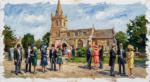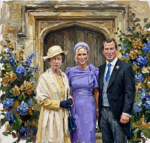
While the global press gathered outside a Cotswolds village church, the wedding of Peter Phillips and Harriet Sperling offered something the world’s royal watchers recognise instinctively: a monarchy behaving like a family.
I have watched royal weddings from many vantage points in my life.
I watched one on a small television in my grandmother’s sitting room in Accra, the picture slightly unclear but the pageantry unmistakable. I watched another from a press enclosure in Copenhagen, where my Danish colleagues covered it with the warm, proprietorial affection of people reporting on a neighbour’s happiness rather than an institution’s choreography. I have learned, over many years of watching, that the weddings that endure in the memory are rarely the grandest ones. They are the ones that feel true.
The wedding of Peter Phillips and Harriet Sperling, held on 6 June 2026 at All Saints Church in the Gloucestershire village of Kemble, felt true.
This is worth pausing on, because it is not as simple as it sounds. The British monarchy has spent much of the past decade navigating a complicated relationship with its own image — too grand for some, not grand enough for others, perpetually caught between the demand for spectacle and the desire for authenticity. What the Phillips wedding offered was a third way that the international press, particularly outside Britain, recognised immediately: a royal family attending a family wedding. Nothing more. Nothing less.
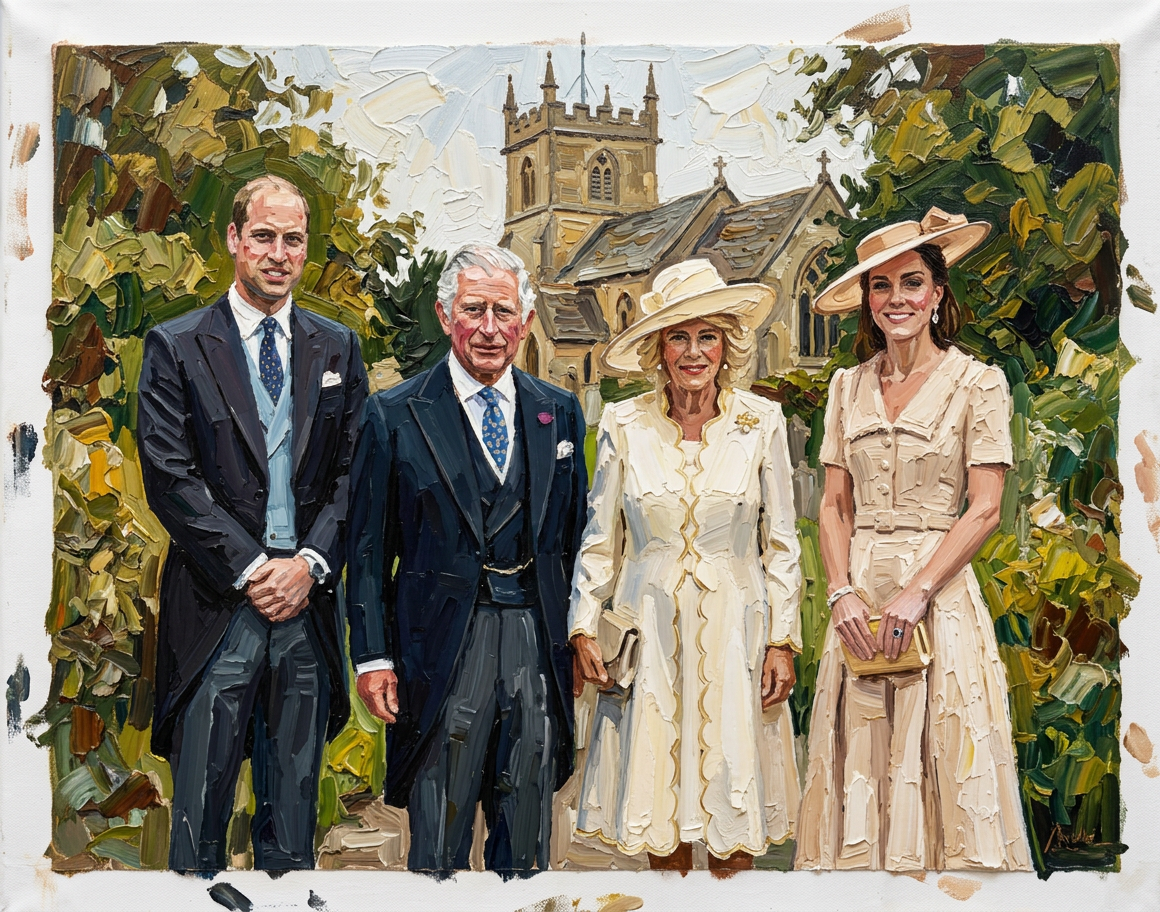
The Scandinavian press understood this instinctively. The Danish and Swedish royal correspondents I follow with interest have spent years documenting what I think of as the neighbourhood monarchy model — the deliberate cultivation of a royal family that is visible, accessible, and recognisably human without sacrificing dignity or purpose. King Frederik and Queen Mary of Denmark have built their public identity on exactly this principle. What struck several of my Nordic colleagues about the Phillips wedding was how naturally the British royal family inhabited the same register. King Charles and Queen Camilla, the Prince and Princess of Wales, Zara and Mike Tindall — all present, all photographed arriving and departing, none performing. Simply attending a wedding.
The international dimension of this occasion extends beyond press coverage. Harriet Sperling is, in several meaningful respects, a modern archetype that resonates across multiple royal cultures. She is a working woman — a paediatric nurse for the National Health Service — marrying into a royal family without holding a royal title herself. She is a mother bringing a teenage daughter into a blended family that already includes two teenage stepdaughters. She has integrated gradually, thoughtfully, publicly — Ascot, Wimbledon, Balmoral, Sandringham, Easter at Windsor. The Japanese press, which covers the British royals with considerable interest, noted the parallel with how Crown Princess Kiko and others have navigated the tension between personal identity and institutional expectation. The cultural context is different in every case. But the human story travels.
What my colleagues in London sometimes miss, in the daily rhythm of palace announcements and photo calls, is how the British monarchy appears to the rest of the world on days like this one. Not as an anachronism. Not as a constitutional curiosity. But as something genuinely rare: an ancient institution that occasionally remembers how to be a family, and is all the more powerful for it.
The village of Kemble will return to its ordinary Saturday by this evening. The cameras will move on. The international correspondents will file their pieces and catch their trains. But somewhere in Gloucestershire, in a house that has meant home to one family for decades, a new family sat down together for the first time.
That story does not need translation. It never does.
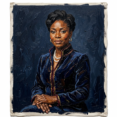
Nadia Osei-Mensah is Crown & Court’s International Royal Correspondent. Born in Accra, raised in Copenhagen, and educated in Tokyo, she is fluent in five languages and equally fluent in the customs and complexities of royal families from every corner of the globe.
“Every crown tells a different story. I’m here to translate.”