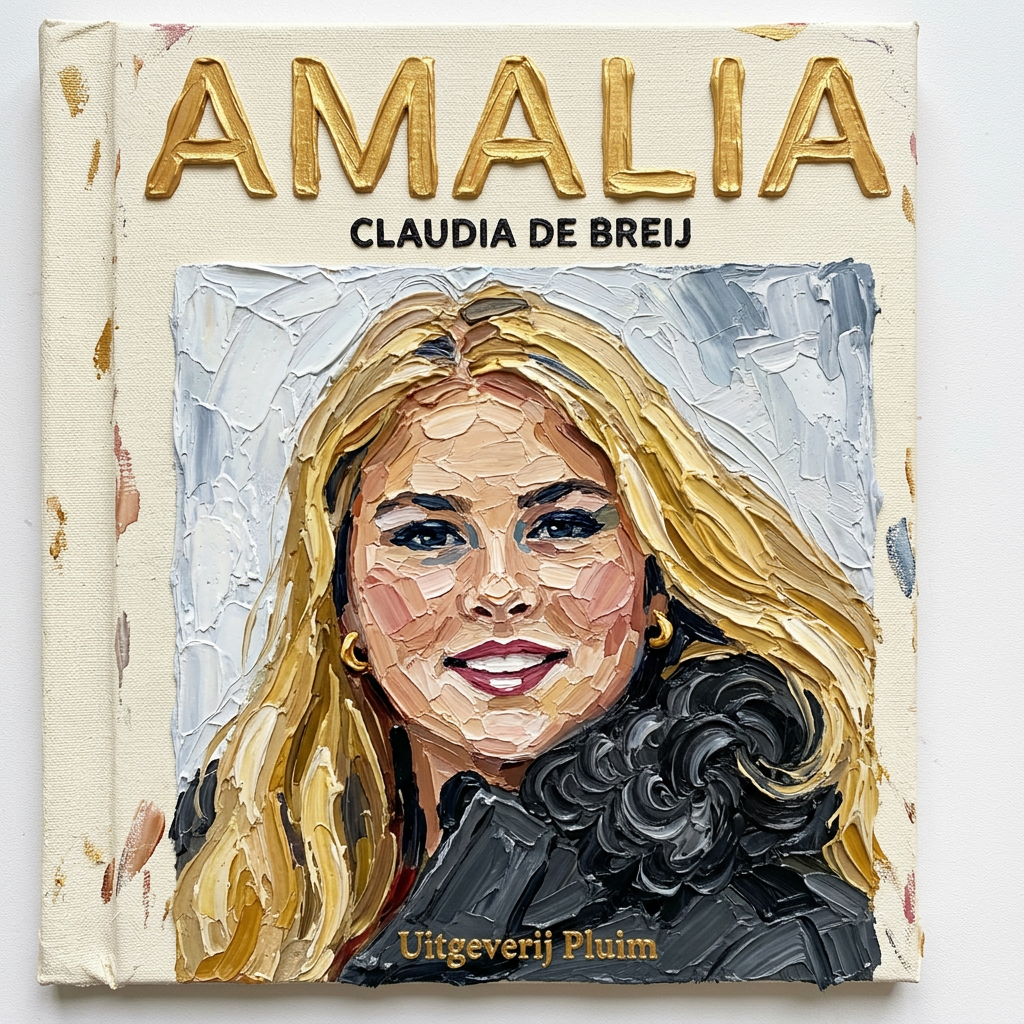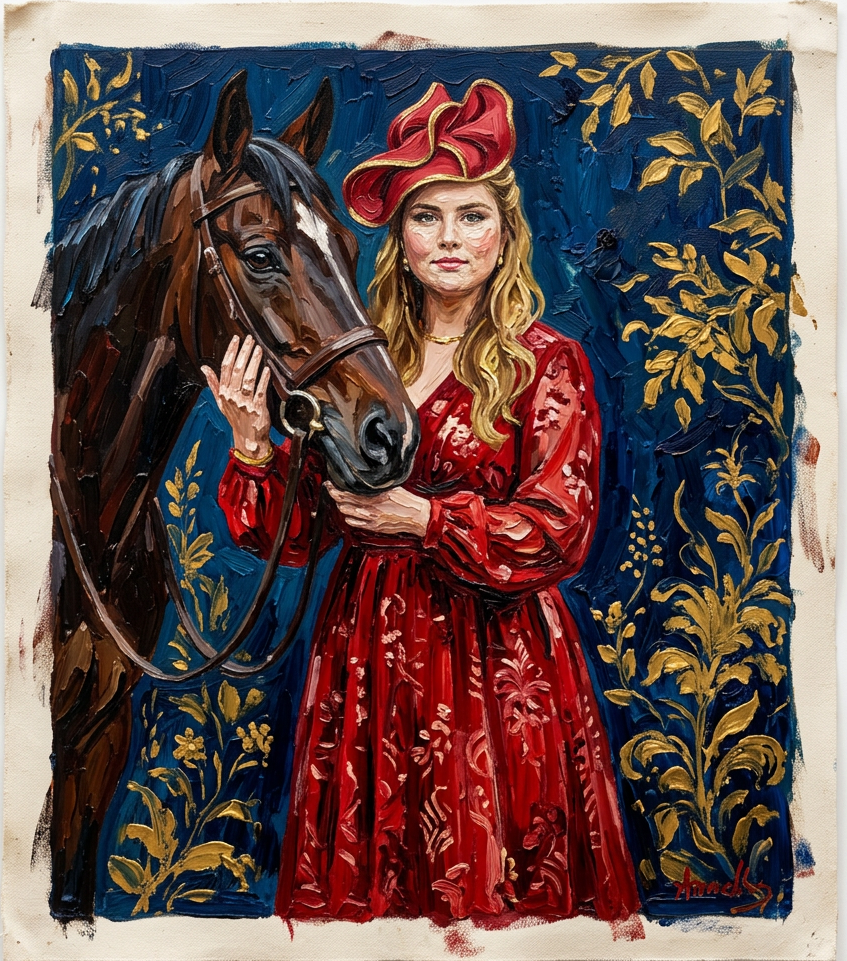
She turned down a million-dollar allowance, moved into student housing, worked as a beach bar waitress, and named her horse Mojito. Then the kidnapping threats came. Princess Amalia of the Netherlands has had rather a more complicated coming of age than most future queens.
There is something rather wonderful about a future queen who names her horse Mojito.
I find myself thinking about that detail more than any other when I consider Princess Catharina-Amalia of the Netherlands. The name is so entirely, refreshingly un-royal. No Sovereign, no Constellation, no carefully chosen name designed to signal breeding and tradition. Just Mojito. Because she apparently worked at a beach bar in Scheveningen one summer during her school holidays and acquired the nickname the Cocktail Queen, and when the time came to name her horse she saw no reason to pretend that had not happened.
This is, I think, the point of Princess Amalia. She is a future queen who has tried, with genuine determination and occasionally considerable personal cost, to be a person first.
She turned twenty-two in December and is currently studying Dutch law at the University of Amsterdam, a second degree following her graduation in July 2025 from the university’s Politics, Psychology, Law and Economics programme. Her final thesis examined the tension between artificial intelligence legislation and fundamental human rights. She is simultaneously enrolled in the Defensity College training programme for military and civilian leadership. She works hard. She takes her future role seriously. And she has fought, at every turn, to do all of this as normally as possible.
The story of her student years is one I find rather moving. She enrolled at the University of Amsterdam in September 2022 with every intention of living in shared student accommodation, taking the tram to lectures, and experiencing university the way her contemporaries did. She lasted less than a month. Criminal gang communications flagged her name as a potential kidnapping target, and within weeks she had left student housing and returned to the royal residence in The Hague, unable to move freely outside. Queen Maxima, speaking to the press during a state visit to Sweden, was visibly emotional. “No student life for her, like other students have,” she said. “It makes me a bit emotional. It is not nice to see your child live like that.”
I find that rather affecting, if I am honest. Not because it is tragic, exactly, but because it is so recognisably parental. A mother watching her daughter lose something ordinary, and minding terribly, and saying so in public, is not the image most people carry of a European royal house. It is the image of a family.
The solution, when it came, was characteristically Dutch in its pragmatism. Princess Amalia quietly relocated to Madrid, studying from Spain for more than a year while the security situation at home was reassessed. She returned to Amsterdam in 2024 when protective measures had been put in place, completed her degree, graduated in July 2025, and is now continuing her education with the kind of quiet determination that suggests she has made her peace with the complications of her inheritance.
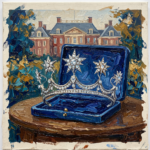
At the German state banquet on 9 June 2026, she wore the Dutch Diamond Star Tiara, assembled from diamond stars given to Queen Emma in 1879, and a periwinkle blue gown by Rachel Gilbert. She stood beside her mother, who wore the Dutch Sapphire Tiara, and her father, and her uncle Prince Constantijn, and she looked, as she increasingly does, entirely comfortable in the role she was born to fill. The transformation from the girl who moved into student accommodation with such hopeful normality to the young woman who can wear a century-old tiara as though it belongs to her, which of course it does, has been rather extraordinary to watch.
She once said, in the biography published to coincide with her eighteenth birthday, that she gives her life to the Netherlands. “If I can prevent a bad situation through diplomacy,” she said, “if I can make the world a little bit better, then I am happy. I am in the service of my country.”
One can’t help but notice that she has already had rather more to navigate than most people twice her age. The kidnapping threats. The lost student years. The secret relocation. The slow, careful return. And through all of it, the Dutch law degree, the thesis on artificial intelligence, the military training programme, the state banquets, the tiaras.
She wanted to be a student. She managed, against considerable odds, to be one. And she is going to be rather a good queen.
Charlotte Ashby is Crown & Court’s Culture and Lifestyle Editor. A country house enthusiast and unapologetic admirer of tradition, she writes about the way royals actually live, the homes, the rituals, and the family moments behind the pageantry.
“Behind every crown is a family — and families are always interesting.”