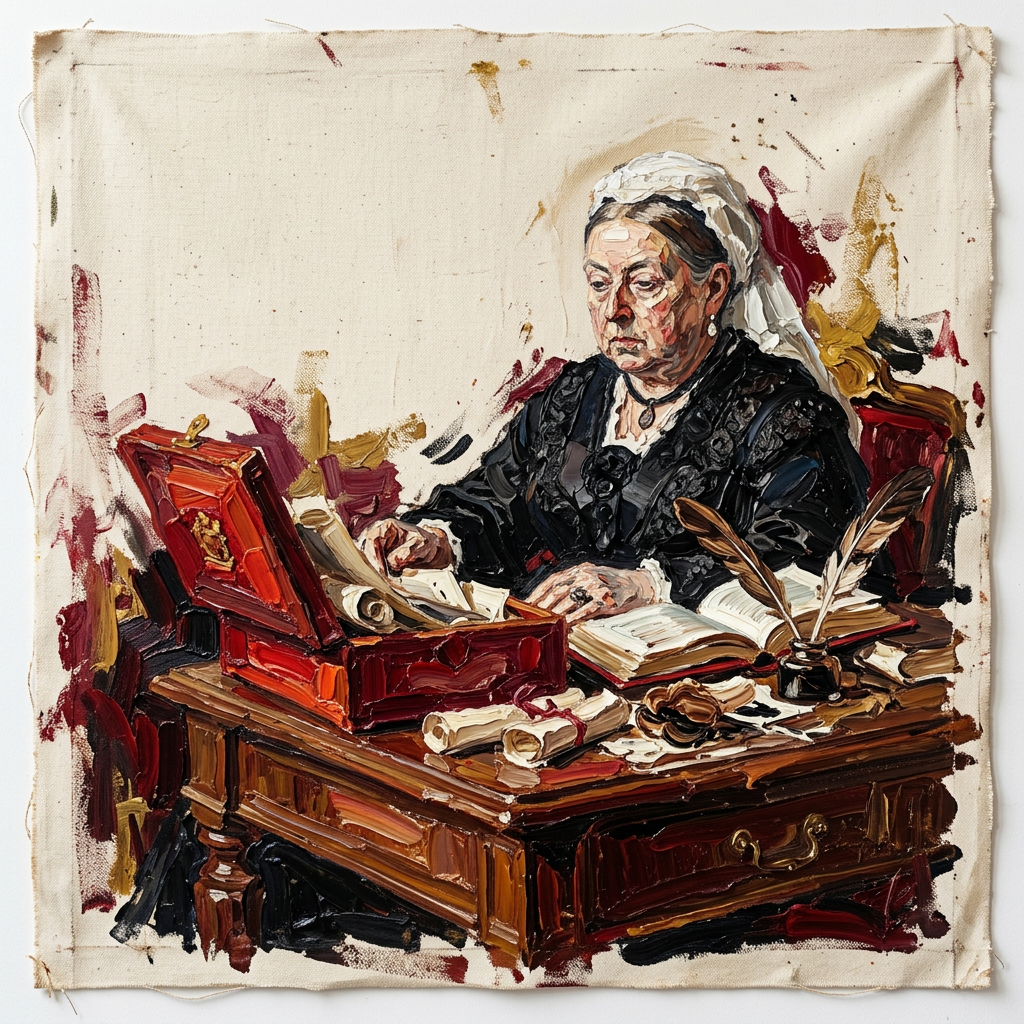
Crown Chronicles: history that still shapes the throne.
Victoria became queen on 20 June 1837. She was eighteen. The monarchy she inherited was in trouble.
Her uncles had seen to that. George IV and William IV left the crown scandal-worn and broadly unpopular. There was real talk in Britain of doing away with the institution altogether. Victoria did not inherit prestige. She inherited a repair job.
She had help. Lord Melbourne, her first prime minister, taught her the basics of how a constitutional monarch actually operates. Prince Albert, whom she married in 1840, pushed further. Between them, Victoria learned the lesson that has defined the British monarchy ever since: real political power moves to Parliament. The Crown keeps the influence.
That sounds like a small distinction. It built the entire modern institution. Under Victoria, the monarch stopped being expected to govern and started being expected to represent. Stability. Family. National identity. The Reform Acts widened the electorate and narrowed her direct authority at the same time. She didn’t fight that shift publicly. She built something else around it instead.
It worked. By the time Victoria died in 1901, the crown that had been mistrusted at her accession had become a genuine source of national affection. She added Empress of India to her titles in 1876, tying the monarchy directly to the empire it presided over. Her nine children married into royal houses across Europe, earning her the unofficial title Grandmother of Europe and quietly wiring the British crown into the continent’s ruling families for a generation.
She reigned for sixty-three years and seven months. Until Elizabeth II, no British monarch had reigned longer. The era took her name because there was no separating the two.
Here is the part worth sitting with. The model Victoria built, a monarch who reigns rather than rules, who represents continuity while elected government does the actual governing, is still the model in place today. Every constitutional monarchy debate happening right now, in Britain or anywhere else, is being argued on terms Victoria set in the 1840s and never got proper credit for setting.
Julia Baird’s biography, Victoria: The Queen, gets closer to the woman behind that model than most accounts bother to. Worth the read.
The palace says nothing about that anniversary most years. Some inheritances are too foundational to need an announcement.
Marcus Webb is Crown & Court’s Royal Correspondent. Fleet Street trained, with twenty years covering British royals, he writes fast, writes fair, and has stood outside Buckingham Palace in the rain more times than he can count.
“The palace says nothing. Which tells you everything.”